
Rechargeable Battery Packs for Electric Fishing Reels: Runtime, Motor Loads and Outdoor Use
An electric fishing reel can retrieve fishing line with the assistance of a motor, reducing the physical effort involved in deep-water fishing. However, battery performance depends on much more than the capacity printed on the pack. Retrieval depth, sinker weight, motor speed and repeated operation can all influence how much energy the reel consumes during a fishing trip.
For anglers choosing replacement power sources and manufacturers developing electric fishing equipment, understanding these differences helps avoid unexpected shutdowns and unrealistic runtime expectations. This guide explains what affects electric fishing reel battery life, how to compare rechargeable battery options and what matters when using them outdoors.
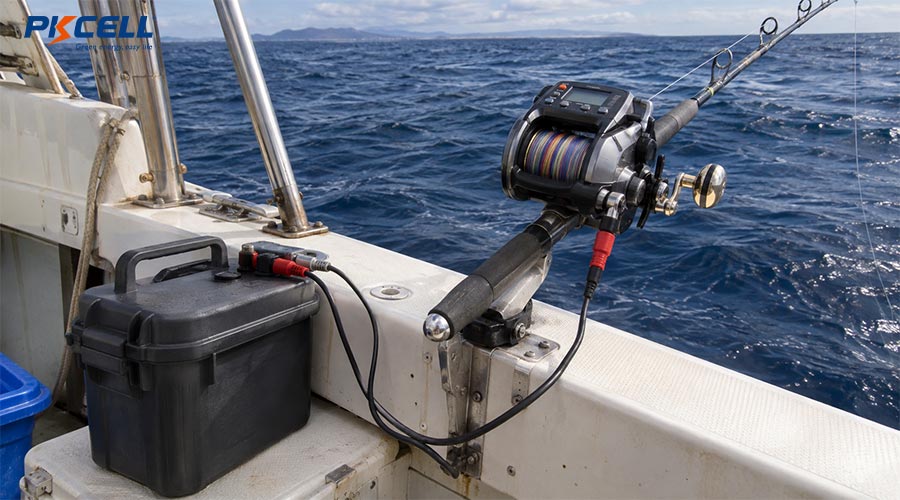
How Long Does an Electric Fishing Reel Battery Last?
There is no universal number of hours or retrieval cycles for an electric fishing reel battery. Actual endurance depends on how frequently the motor operates, the load it handles during retrieval and the usable energy available from the connected battery.
Unlike a device that draws relatively steady power, an electric fishing reel may remain idle while waiting for a bite and then operate at significantly higher power during retrieval. For this reason, the number of retrievals per charge can be more meaningful than continuous operating time.
Why Fishing Depth Changes Battery Endurance
Retrieving line from greater depths generally requires the motor to operate for longer, assuming comparable retrieval speed and load. A short retrieval from shallow water may consume relatively little energy, while repeated deep-water retrievals can place substantially greater demands on the pack.
Other conditions also affect the result. A heavy sinker, additional resistance in the water or a struggling fish may increase motor demand. Conversely, lighter loads and fewer retrievals can reduce total energy use.
When comparing batteries, anglers should therefore think about their normal fishing pattern rather than relying on a single advertised runtime figure.
Understanding Motor Loads During Line Retrieval
Electric reels do not operate under identical loads throughout a fishing session. Their power requirements can change between standby, light retrieval and demanding retrieval conditions.
| Fishing activity | Battery demand | What affects energy use? |
|---|---|---|
| Waiting or standby | Usually relatively low | Display, control electronics and active features |
| Light line retrieval | Moderate and variable | Retrieval speed, line length and sinker weight |
| Deep-water retrieval | Longer motor operation | Fishing depth, retrieval duration and load |
| Heavy-load retrieval | Potentially higher motor demand | Line tension, mechanical resistance and motor control |
| Repeated retrievals | Accumulated energy consumption | Number of cycles, operating time and rest intervals |
These are qualitative operating conditions, not fixed current ratings. An actual reel’s battery demand must be determined from its design and operating measurements.
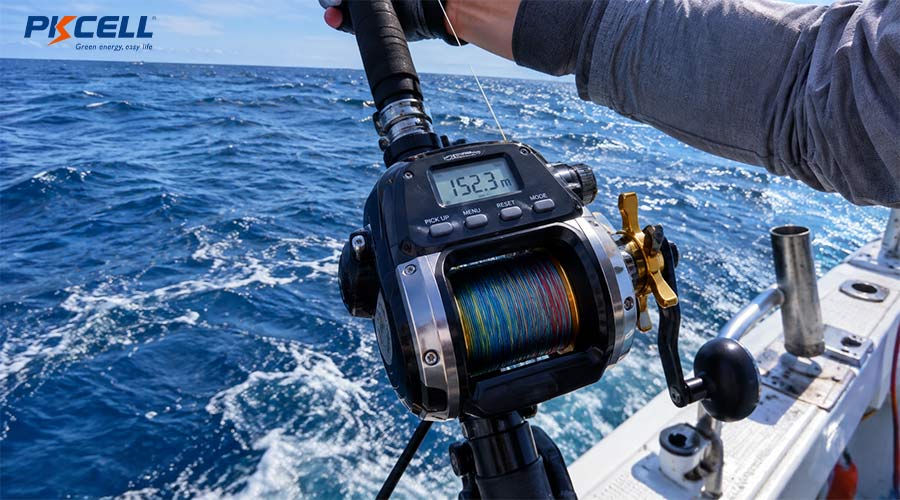
Battery Capacity vs. Retrieval Cycles
Battery capacity is commonly expressed in milliamp-hours (mAh) or amp-hours (Ah). However, comparing batteries with different voltages using mAh alone can be misleading. Watt-hours (Wh) provide a more useful starting point for comparing their nominal stored energy.
Nominal battery energy (Wh) = nominal voltage (V) × capacity (Ah)
For example, a hypothetical 7.4V 5000mAh rechargeable lithium-ion pack contains approximately 37Wh of nominal energy.
If a defined retrieval cycle consumes 1Wh at the battery terminals and 30Wh is usable under the tested conditions, the pack could theoretically support around 30 such cycles. This is an illustrative calculation, not an actual performance rating for any PKCELL product or fishing reel.
In real use, the energy per retrieval varies with the operating conditions. Some remaining energy may also be unavailable because of voltage cutoff, temperature, discharge behavior or other system limitations.
A practical battery endurance comparison should therefore record fishing depth, load, retrieval settings, initial battery condition and the number of completed cycles.
Choosing a Rechargeable Battery Pack for an Electric Fishing Reel
Most battery selection decisions begin with the reel’s specified power input and compatible battery configuration. The correct pack must provide a suitable voltage and electrical interface before capacity is considered.
1. Match the Reel’s Voltage Requirements
Different electric fishing reels may require different external power supplies or dedicated rechargeable batteries. Always check the reel manufacturer’s approved voltage range, connector polarity and charging requirements.
Do not connect a battery solely because its nominal voltage appears close to the reel’s stated requirement. The fully charged voltage, operating range and connector compatibility must also match.
2. Consider Lithium-Ion Battery Formats
Rechargeable lithium-ion batteries are worth evaluating where portable energy storage, repeated charging and manageable weight are priorities. Depending on the equipment design, cylindrical cells such as 18650 or 21700 may be considered for battery pack construction.
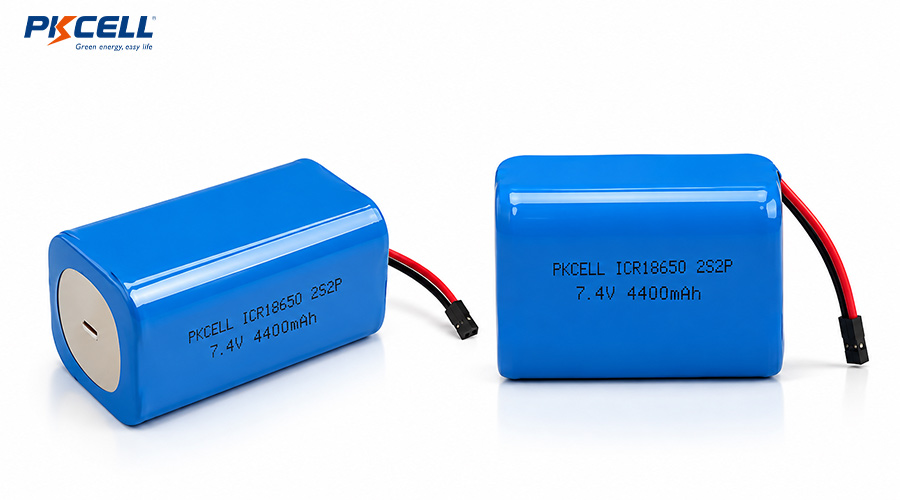
PKCELL offers 18650 lithium-ion battery pack configurations with different voltage and capacity options, as well as 7.4V 5000mAh INR21700 battery packs for further product evaluation.
These products are examples of available rechargeable battery formats. They are not presented as ready-to-use replacements for any particular fishing reel. Electrical compatibility, current capability, mechanical protection and charging arrangements must be confirmed before use.
3. Balance Battery Size and Fishing Duration
A larger pack may offer more nominal energy, but it also affects carrying weight, storage and mounting arrangements. For fishing applications, the most suitable choice depends on whether the battery is carried separately, installed in a dedicated compartment or secured near the fishing equipment.
The goal is to provide enough usable energy for the expected fishing session without creating unnecessary bulk or an inconvenient connection arrangement.
Outdoor Use: Moisture, Saltwater and Battery Protection
Fishing equipment is regularly exposed to conditions that are less predictable than indoor electronic applications. Moisture, salt spray, temperature changes and repeated handling can all influence battery reliability.
Prevent Water Exposure and Connector Corrosion
A rechargeable battery pack should not be assumed to be waterproof simply because it is intended for outdoor use. Unless a complete battery assembly has a verified ingress-protection rating, avoid exposing it to rain, splashes or direct contact with water.
Saltwater environments require particular attention because moisture and salt deposits can accelerate corrosion at terminals and connectors. A compatible protective enclosure, suitable seals and appropriate connector materials may be necessary for the intended application.
If water enters a battery compartment or reaches exposed electrical contacts, stop using the equipment and follow the manufacturer’s safety instructions. Do not charge a wet or potentially damaged battery.
Manage Heat During Long Fishing Sessions
Battery performance can change in hot or cold environments. Leaving a battery in direct sunlight, storing it inside a hot vehicle or operating it outside the cell’s approved temperature range can affect usable capacity, performance and service life.
Use the battery and charger only within their specified temperature limits. Keep the battery protected from prolonged direct sunlight and allow it to return to an acceptable charging temperature before recharging.
Protect Cables and External Battery Connections
Fishing line, moving equipment and regular handling can place strain on external power cables. Connections should be routed and secured so that they do not interfere with reel operation or become accidentally disconnected.
Appropriate cable strain relief, connector retention and protection against abrasion are particularly important when the battery is stored separately from the reel.
Charging and Caring for Fishing Reel Batteries
Good charging and storage practices help preserve rechargeable battery performance between fishing trips.
- Use a compatible charger: Follow the pack manufacturer’s specified charging voltage, current and connector requirements.
- Inspect before each trip: Check the housing, cables and terminals for damage, corrosion or loose connections.
- Keep the battery dry: Avoid charging in wet environments or using damaged electrical contacts.
- Store appropriately: Follow the recommended storage temperature and state-of-charge guidance for the specific battery.
- Monitor aging: If the number of retrieval cycles decreases noticeably, check the battery’s condition and the reel’s electrical connections.
A battery that becomes swollen, unusually hot, physically damaged or otherwise abnormal should be removed from service and handled according to the manufacturer’s safety guidance.
Battery Pack Considerations for Fishing Equipment Manufacturers
For manufacturers developing electric fishing reels or dedicated rechargeable accessories, a battery pack can be configured around the product’s intended voltage, capacity, physical dimensions and electrical connections.
Important project information includes the reel’s operating voltage, measured motor load, expected retrieval cycles, battery compartment dimensions, charging method and intended outdoor environment.
PKCELL provides customized rechargeable battery pack services, including options for cell configuration, protection systems and connection methods. The final design should be evaluated as part of the complete fishing equipment system rather than treated as a universally interchangeable battery.
Frequently Asked Questions
How many times can an electric fishing reel retrieve line on one charge?
The number depends on battery energy, retrieval depth, load and operating speed. A meaningful estimate requires measuring the energy used in representative retrieval cycles rather than relying on battery capacity alone.
Are lithium-ion batteries suitable for electric fishing reels?
Rechargeable lithium-ion packs can be considered when their voltage, current capability, connectors and protection requirements match the reel. Not every lithium-ion battery is compatible with every electric reel.
Can I use a larger-capacity battery for longer fishing trips?
A compatible battery with greater usable energy may support more retrievals, but the voltage range, current capability, connection method, manufacturer requirements and physical installation must still be suitable.
Can rechargeable fishing reel batteries be used in saltwater environments?
They may be used in suitable protected assemblies, but salt spray and moisture can damage unprotected terminals and electrical connections. Outdoor suitability depends on the complete battery enclosure and verified environmental protection, not just the battery chemistry.
Conclusion
Choosing a rechargeable battery pack for an electric fishing reel involves more than finding the highest mAh rating. Fishing depth, retrieval frequency, motor load and environmental exposure all affect how the power source performs during a trip.
For dependable operation, begin with the reel’s approved electrical requirements, compare usable battery energy and consider how the pack will be protected, connected and recharged outdoors. Equipment manufacturers can then evaluate a battery configuration that matches their intended product and operating conditions.
Looking for a Rechargeable Battery Pack for Fishing Equipment?
PKCELL provides lithium-ion battery cells and customized rechargeable battery pack solutions for portable electronic equipment.
If you are developing an electric fishing reel or related accessory, share your required voltage, capacity, dimensions, motor power requirements and expected order quantity for a project review.
Post time: Nov-24-2026


