
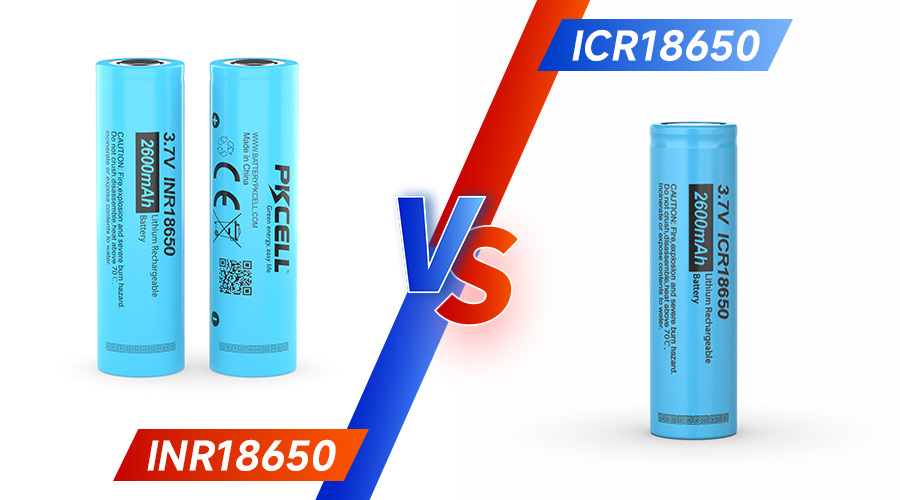
1. The ICR Foundation: A Proven Track Record
PKCELL’s ICR 18650 battery has long served as the backbone of countless commercial and industrial applications. Built on lithium cobalt oxide chemistry (LiCoO₂), these cells are renowned for their high energy density and consistent discharge characteristics. The company has delivered millions of ICR-based battery packs across diverse sectors, including digital floor scales and platform scales, ATM anti-theft and currency protection systems, GPS and asset tracking systems, emergency and backup power solutions, and renewable energy storage projects. These deployments have validated the ICR platform’s reliability in real-world environments where stable, long-duration power delivery is paramount.
However, PKCELL recognizes the evolving power landscape. The proliferation of high-drain devices such as power tools, electric vehicles, medical infusion pumps, and industrial robotics has created new demands that push beyond the performance envelope of conventional ICR cells.
2. INR Li(NiCoMn)O₂: The Next Leap in Lithium-Ion Technology
PKCELL’s INR series features a nickel-manganese-cobalt (NMC) cathode chemistry that builds upon the ICR foundation while addressing its inherent limitations. According to PKCELL’s technical analysis published on its official news portal, “INR batteries incorporate nickel and manganese in addition to cobalt,” a blend that “not only maintains a high energy density but also enhances the thermal stability and safety of the batteries.”
The three key performance upgrades documented in PKCELL’s own comparative guide are as follows:
| Performance Dimension | ICR (LiCoO₂) | INR (LiNiMnCoO₂ / NMC) |
|---|---|---|
| Safety (Thermal Stability) | Requires meticulous handling and protection circuitry; susceptible to overheating and thermal runaway | Inherently safer; improved structural stability less prone to overheating, making it “less risky and able to withstand a wider range of operating conditions” |
| Cycle Life | Standard lifespan suited for moderate charge-discharge cycling | “Typically offers a longer cycle life due to enhanced stability and less aggressive degradation during charge and discharge cycles” |
| High-Drain Capability | Optimized for low to moderate discharge rates | Prevalent in EVs, power tools, and high-drain applications; “maintains structural integrity under high discharge rates” |
While ICR batteries “generally have a higher energy density” and remain the “go-to for high energy density needs in compact devices,” INR technology now offers a more balanced profile: competitive energy density paired with safety and longevity benefits that are critical for mission-critical and high-utilization equipment.
3. Market Drivers Behind the Technology Transition
The strategic shift from ICR toward INR chemistries aligns with broader market trends and customer requirements observed by PKCELL:
- Surge in High-Drain Applications – The adoption of INR batteries in electric vehicles (EVs) and power tools has accelerated as manufacturers demand cells that “can handle high power requirements and frequent charging cycles without significant degradation.”
- Safety as a Procurement Priority – In applications where “battery failure can have severe consequences,” including medical devices and industrial systems, the inherent stability of INR chemistry provides a compelling risk-reduction advantage.
- Total Cost of Ownership – Longer cycle life directly translates to reduced replacement frequency and lower lifecycle costs, a key procurement consideration for B2B buyers in fleet management, infrastructure monitoring, and industrial automation.
- Supply Chain Diversification – “The inclusion of manganese reduces the cost and the dependency on cobalt, which is more expensive and less environmentally friendly,” improving supply chain resilience for large-scale deployments.
4. INR Product Applications and Target Markets
PKCELL’s INR series is engineered to serve high-demand B2B verticals where safety, longevity, and high-current capability intersect:
- Electric Vehicles and Light Electric Vehicles (LEVs) – INR cells meet the rigorous demands of “frequent charging cycles” and high power requirements characteristic of modern EV battery systems.
- Power Tools and Cordless Equipment – The chemistry’s ability to “maintain structural integrity under high discharge rates” ensures consistent performance in high-torque, high-drain professional tools.
- Medical Devices and Infusion Pumps – Stable voltage output and enhanced safety characteristics make INR cells ideal for life-critical medical equipment, building upon PKCELL’s established expertise in medical battery solutions.
- Portable Power Banks and Consumer Energy Storage – INR batteries are “often chosen for portable power banks because of their safer chemistry and reasonable energy density,” providing “a good compromise between performance and safety” for devices used in diverse environments.
- Industrial IoT and Remote Monitoring – Extended cycle life enables longer maintenance-free operation for field-deployed sensors, asset trackers, and environmental monitoring stations.
5. Manufacturing Excellence and Quality Certifications
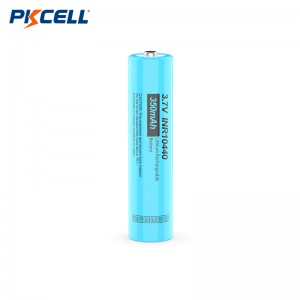
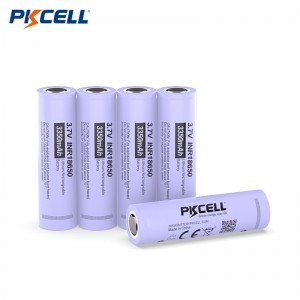
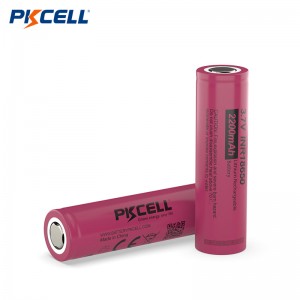
PKCELL’s INR battery manufacturing is backed by rigorous quality management systems. The company holds ISO9001 certification and its products comply with CE and RoHS directives, ensuring that every INR cell meets the demanding standards required by global B2B customers. As the company states on its official website, “Our products are known for high energy density, long lifespan, and consistent performance, backed by strict quality control.”
For B2B buyers evaluating the transition from ICR to INR chemistries, PKCELL offers tailored consultation services. The company’s technical team provides application-specific guidance to help procurement and engineering teams select the optimal cell chemistry for their unique operational requirements.
6. Looking Ahead
“As technology evolves, the selection between INR and ICR will likely be guided by an ever-greater understanding of material science and user demands, pushing towards safer, more efficient, and cost-effective battery solutions.”
PKCELL remains committed to advancing battery technology that meets the diverse needs of industrial applications, OEMs, and global distributors. With over two decades of experience and a proven track record in lithium-ion, alkaline, NiMH, NiCd, and lead-acid battery chemistries, the company continues to invest in next-generation power solutions that drive business forward.
Frequently Asked Questions (FAQ)
Post time: Apr-30-2026


