
PKCELL at Hong Kong Electronics Fair Autumn 2026: Connecting Rechargeable Battery Technology with Industry Needs
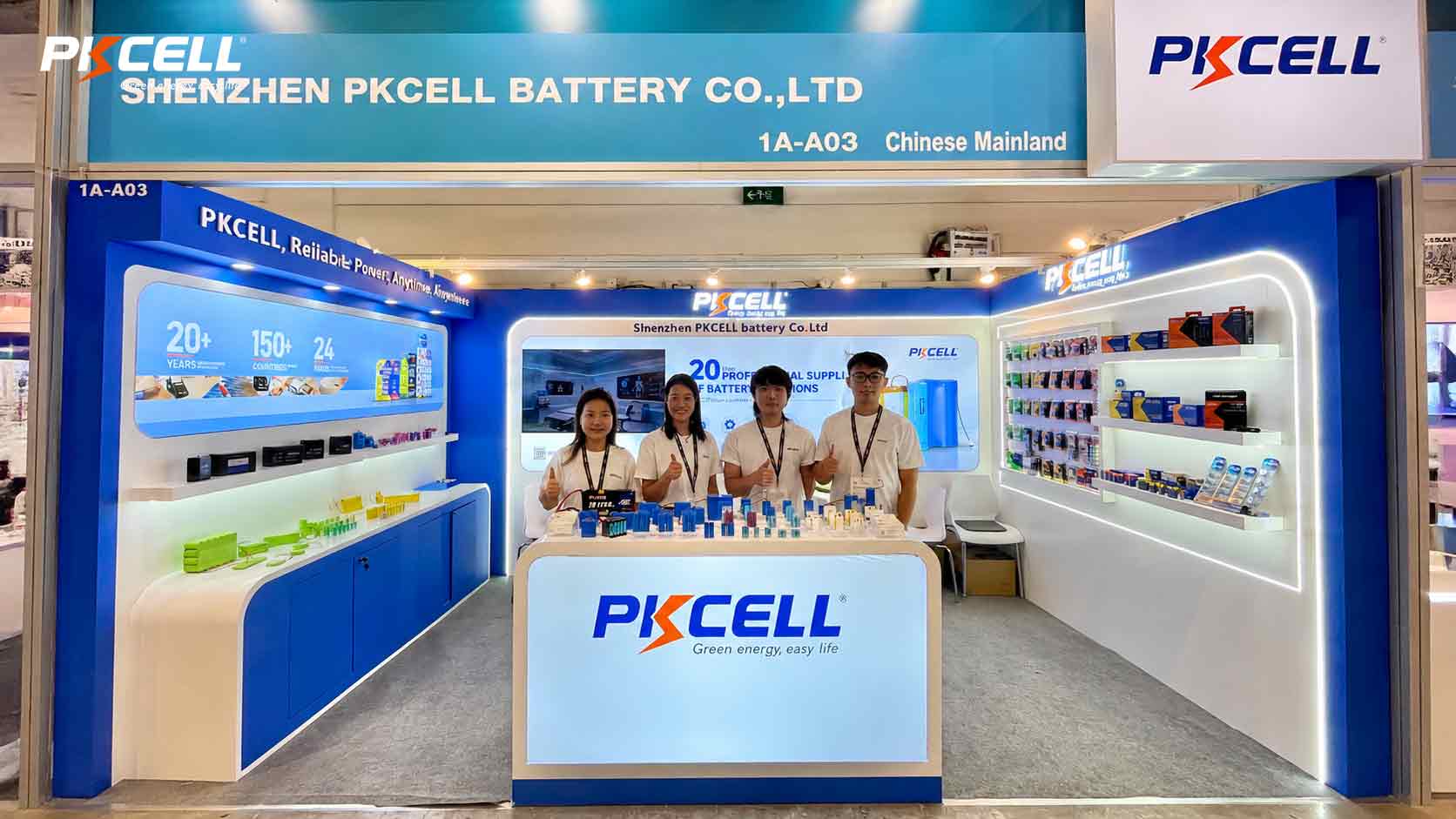
PKCELL participated in the HKTDC Hong Kong Electronics Fair (Autumn Edition) 2026, held from October 13 to 16 at the Hong Kong Convention and Exhibition Centre. At Booth 1A-A03, the company presented rechargeable battery technologies and multi-chemistry power solutions, including lithium polymer pouch batteries and 18650 lithium-ion cells.
Rechargeable batteries serve a wide range of electronic products, but the requirements vary significantly from one device to another. Some designs prioritize compact dimensions, while others need a specific voltage, runtime, discharge capability or battery pack configuration. The exhibition provided an opportunity to present PKCELL’s rechargeable battery portfolio in the context of these different product development requirements.
This recap looks beyond the exhibition itself to examine how battery format, electrical design and system integration influence rechargeable battery selection, and how these considerations can guide future OEM projects.
From Battery Cells to Integrated Power Solutions
A rechargeable battery is not selected in isolation. Its form factor, electrical characteristics and connection requirements must work with the device’s overall design. A compact handheld product, for example, may have different space constraints from an industrial instrument or a multi-cell battery-powered system.
PKCELL’s rechargeable battery portfolio covers several chemistries and formats. The key engineering task is to match the available battery technology to the application’s operating profile, charging requirements, installation space and expected usage cycle.
Cylindrical Lithium-Ion Cells for Flexible Pack Design
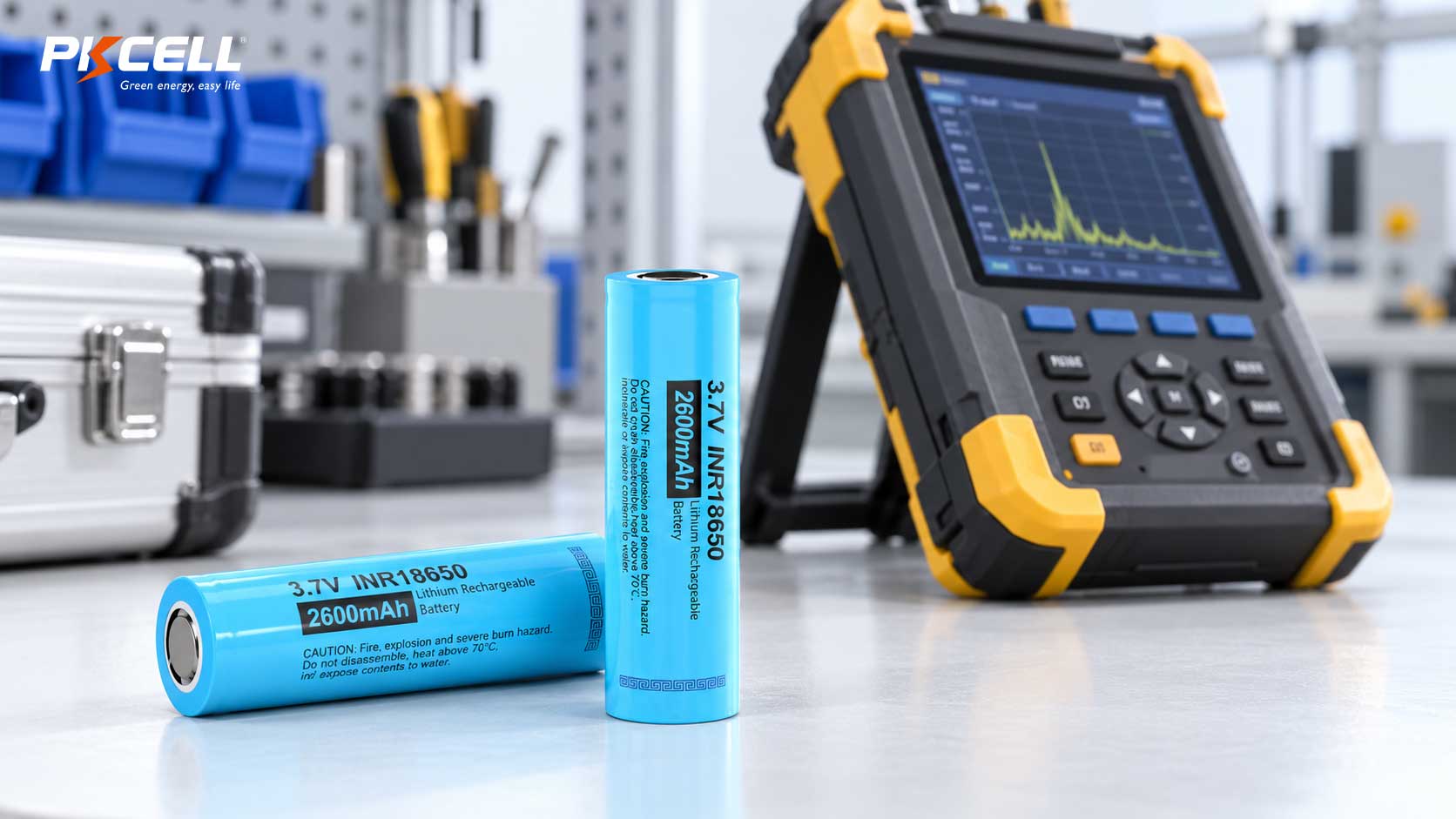
Cylindrical lithium-ion cells such as 18650 are widely used in rechargeable battery packs for portable equipment, instruments, tools and other electronic devices. Their standardized cylindrical format provides a practical starting point for evaluating pack dimensions and series-parallel configurations.
When designing a battery pack, engineers need to consider the required voltage and capacity alongside discharge current, operating temperature, charging conditions and protection requirements. The finished pack may also require specific wires, connectors, insulation and mechanical arrangements to fit the equipment.
These details should be reviewed together rather than selecting a cell solely by its nominal capacity.
Explore PKCELL 3.7V 2600mAh 18650 Lithium-Ion Battery
Lithium Polymer Batteries for Space-Constrained Products
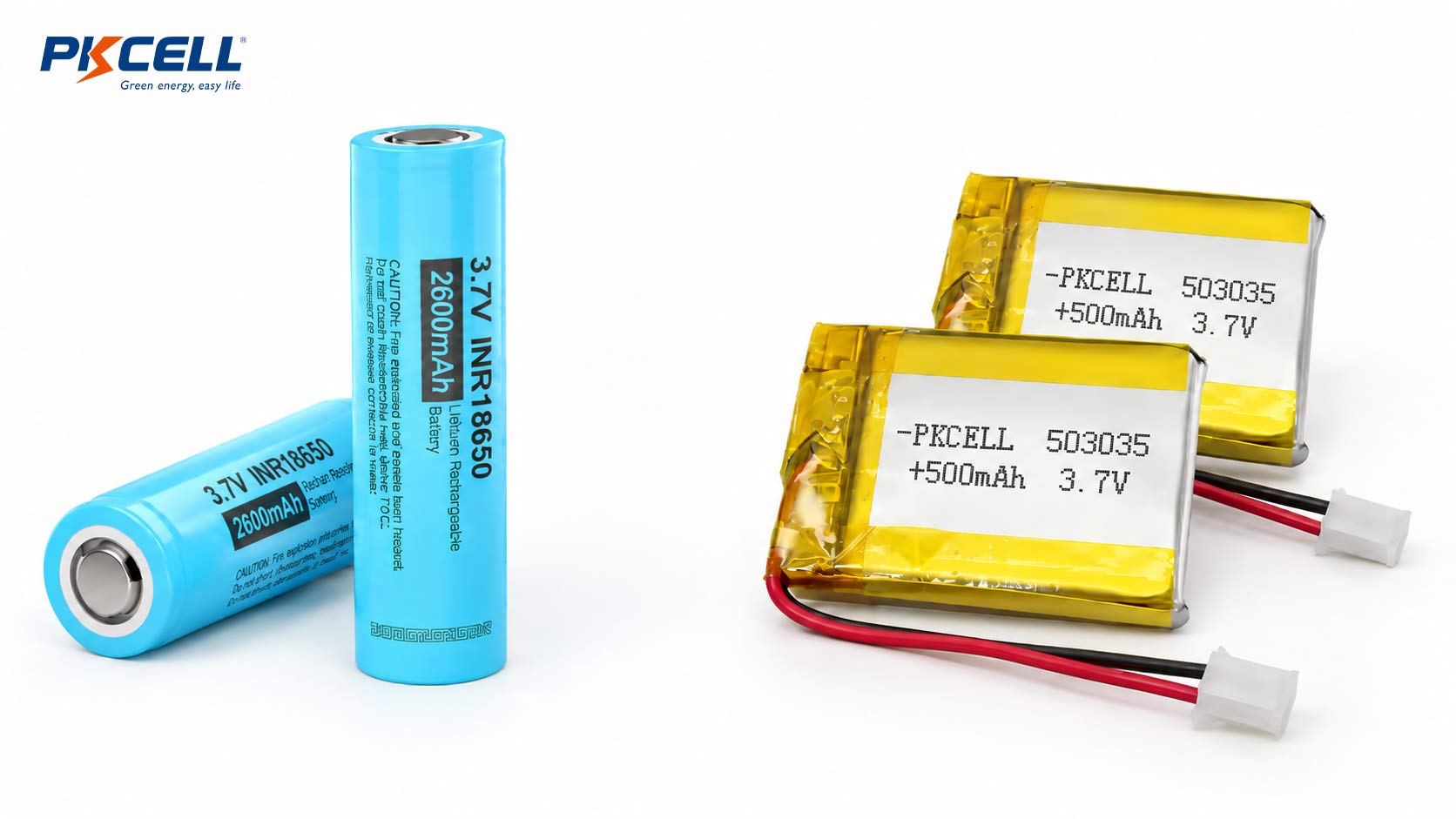
Lithium polymer (LiPo) batteries offer pouch formats that can be considered for products where thickness, footprint and internal layout are important. Depending on the model, they can be evaluated for portable electronics, compact instruments, wearable products and other devices with specific packaging constraints.
Battery dimensions and capacity must be assessed against the available space and the device’s runtime requirements. Connection orientation, cable exit position and mechanical protection should also be considered when integrating a pouch cell into the finished product.
For example, the LP503035 3.7V 500mAh battery provides a reference for evaluating a compact pouch-cell format. It should only be selected when its actual specifications meet the application’s requirements.
Explore PKCELL LP503035 Lithium Polymer Battery
What Changes When a Battery Becomes a Pack?
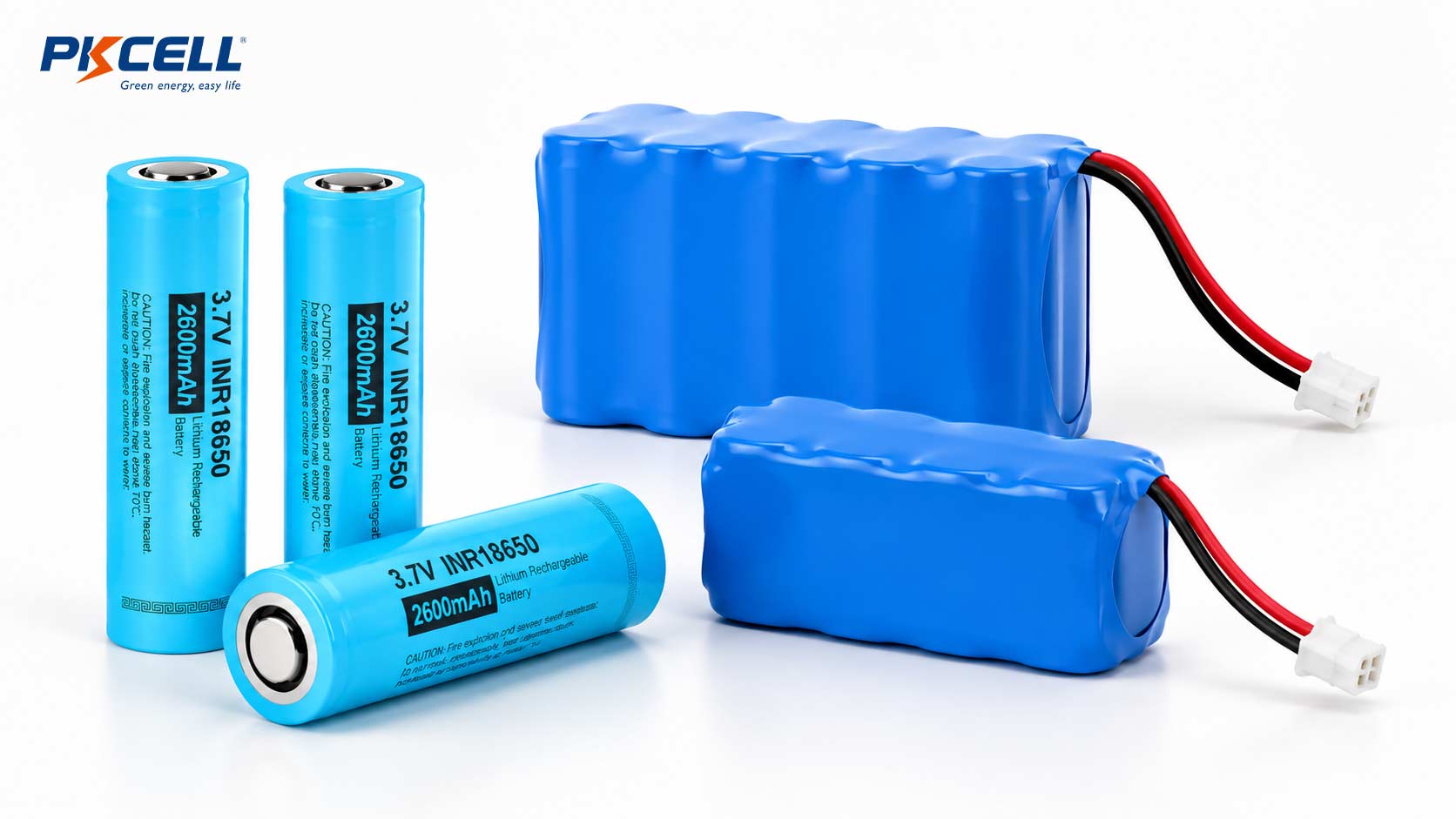
For many OEM products, a single cell is not enough to meet the required system voltage, runtime or installation configuration. A battery pack combines cells into an assembly designed around the equipment’s electrical and mechanical requirements.
Pack development therefore introduces additional decisions beyond cell chemistry. These include cell arrangement, electrical interconnection, protection circuitry where required, wiring, connectors, insulation and the physical space available inside the product.
Voltage and Capacity Configuration
Series connections increase pack voltage, while parallel connections increase available capacity and current capability subject to the cell specifications and pack design. The correct arrangement depends on the device’s voltage range, energy budget and discharge requirements.
For cylindrical lithium-ion projects, PKCELL provides battery cells and pack options that can be evaluated against the intended system requirements.
Review the 18650 Cell Reference
Protection and Electrical Integration
Rechargeable lithium battery packs may require a battery management system or protection circuitry according to their chemistry, configuration and intended use. Charging control, overcurrent protection, voltage limits and thermal considerations should be reviewed as part of the complete product design.
The appropriate protection arrangement cannot be determined from battery capacity alone. It should be specified and validated against the cell datasheet, pack configuration, charger and device operating conditions.
Mechanical Fit and Connection Details
Even when the electrical specifications are suitable, a pack may require changes to dimensions, wire length, connector type, terminal arrangement or enclosure design. Addressing these details early can reduce integration problems during prototype development.
Explore PKCELL Custom Battery Pack Solutions
Matching Rechargeable Battery Technologies to Different Use Cases
Different rechargeable chemistries and formats serve different purposes. Selecting a suitable solution requires a clear understanding of the device’s charging behavior, energy requirements, mechanical constraints and operating environment.
| Battery Technology | Key Selection Considerations | Example Applications |
|---|---|---|
| Cylindrical Li-ion | Pack voltage, capacity, discharge current, cell arrangement and protection requirements | Portable instruments, tools, robotics and electronic equipment |
| LiPo pouch cells | Thickness, footprint, capacity, cable orientation and mechanical protection | Compact electronics, wearable products and handheld devices |
| LiFePO4 | System voltage, cycle requirements, thermal characteristics and pack configuration | Selected backup power and energy storage applications |
| NiMH | Nominal voltage, charging method, discharge profile and available cell format | Compatible portable devices and industrial equipment |
This comparison is a starting point for evaluating battery options, not a universal recommendation. The final chemistry and configuration should be determined by the actual application requirements and the relevant product documentation.
Explore the PKCELL Rechargeable Battery Portfolio
OEM Development Starts with Clear Requirements
For equipment manufacturers, a productive battery development process begins with a clear technical specification. The more accurately the application and constraints are defined, the easier it is to assess possible cell formats and pack configurations.
Before starting a new battery project, consider preparing the following information:
- Application and usage: Device type, operating environment and expected duty cycle.
- Electrical targets: Nominal voltage, capacity, continuous current and peak current.
- Charging requirements: Charging voltage, current, charging method and expected usage cycle.
- Mechanical design: Available space, pack dimensions, wire length and connector requirements.
- Protection and compliance: Relevant circuit protection, documentation and destination-market requirements.
- Project planning: Sample quantities, estimated order volume and target production schedule.
These details help determine which battery chemistry and configuration should be evaluated first. Samples and final pack specifications should be confirmed against the actual design and appropriate testing requirements.
Discuss a Customized Rechargeable Battery Pack
Continuing Beyond the Exhibition
Hong Kong Electronics Fair Autumn Edition 2026 provided a platform for PKCELL to present rechargeable battery products and connect with the wider electronics industry. The product technologies represented at the exhibition reflect the different design considerations involved in rechargeable power systems, from cylindrical cells to compact pouch batteries and multi-chemistry solutions.
For companies developing new equipment, the next step is to translate product requirements into a battery specification that can be assessed and tested. This may involve comparing cell formats, confirming a voltage and capacity target, reviewing charging requirements or developing a customized battery pack.
PKCELL’s rechargeable battery portfolio supports a range of product development needs. Customers can explore the available products and share their application details to begin evaluating suitable options.
Browse Rechargeable Battery Products
Discuss Your Rechargeable Battery Project with PKCELL
Are you developing portable electronics, industrial equipment, smart devices or another rechargeable product? PKCELL welcomes inquiries from OEMs, equipment manufacturers, distributors and sourcing teams looking for rechargeable battery cells or customized battery pack solutions.
Have a Rechargeable Battery Project to Evaluate?
Share your application, voltage and capacity requirements, battery dimensions and estimated quantity with PKCELL to discuss suitable rechargeable battery options.
Discuss Your Battery Project →
Product Focus: Cylindrical Li-ion Batteries · LiPo Pouch Cells · LiFePO4 Batteries · NiMH Batteries · Customized Rechargeable Battery Packs
Thank you to everyone who connected with PKCELL during Hong Kong Electronics Fair Autumn Edition 2026. We look forward to continuing conversations about rechargeable battery selection, product integration and future OEM projects.
Post time: Oct-19-2026


