
LoRaWAN Tracker Battery Guide: Choosing Rechargeable Power for IoT Asset Tracking
LoRaWAN trackers are widely used to monitor containers, tools, pallets, livestock, outdoor equipment, and industrial assets. But stable tracking performance depends on more than wireless coverage. The battery pack must support long standby time, reliable pulse output, harsh working conditions, and the physical design of the tracking device.
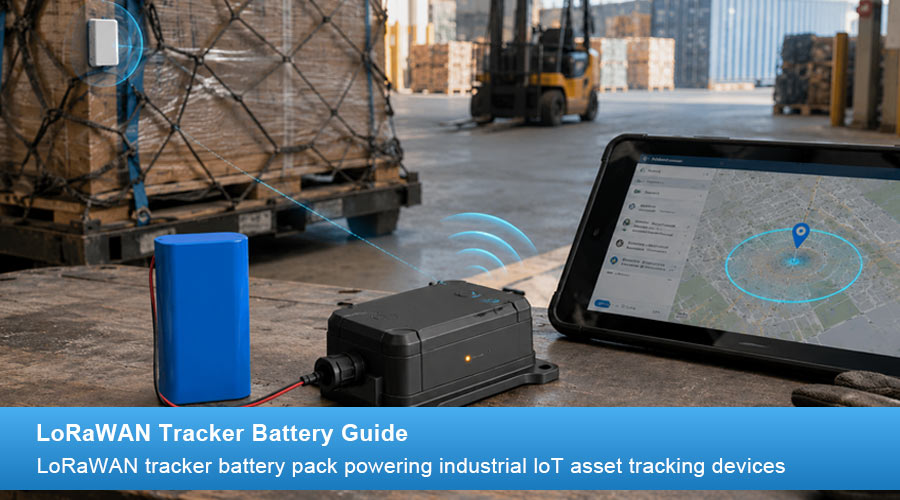
What Is a LoRaWAN Tracker?
A LoRaWAN tracker is an IoT tracking device that uses the LoRaWAN low-power wide-area network protocol to send location, motion, and sensor data over long distances. Depending on the design, it may include GPS or GNSS positioning, Bluetooth, Wi-Fi scanning, temperature sensing, accelerometers, or tamper detection. According to the LoRa Alliance, LoRaWAN is designed for battery-operated devices connected across regional, national, or global networks. That makes it a strong fit for low-data, long-range tracking applications where the device only needs to report at intervals or when an event happens. For rechargeable tracker designs, OEMs often evaluate IoT battery solutions, GPS tracker battery solutions, compact Li-Polymer batteries, or custom battery packs to match device size, runtime, charging method, and field environment.
How LoRaWAN Trackers Work
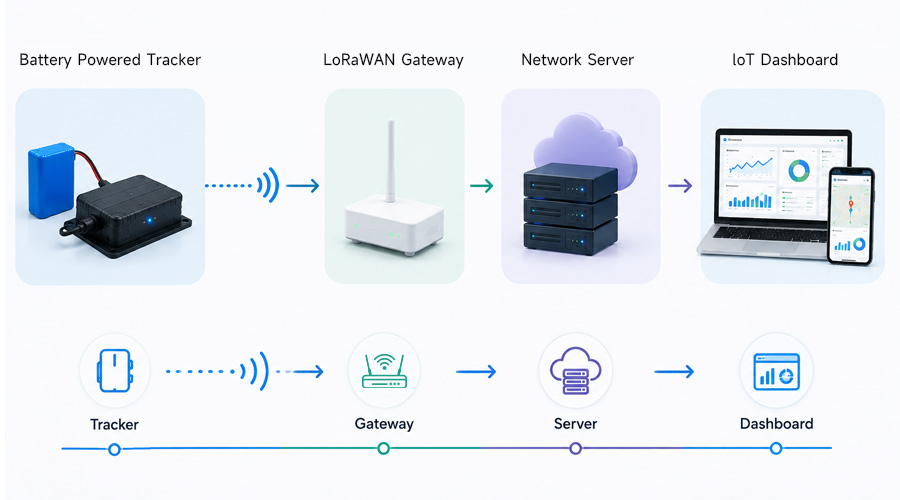
A typical LoRaWAN tracking system includes the tracker, LoRaWAN gateways, a network server, and an application dashboard. The device wakes up on a schedule, after movement, or after a sensor event. It collects location or condition data, sends a compact message through the LoRaWAN network, and returns to low-power sleep mode.
1. Tracking Device
Collects GPS, motion, temperature, light, or tamper data from the asset.
2. LoRaWAN Gateway
Receives the radio message and forwards it to the network server.
3. IoT Platform
Displays asset location, geofence alerts, movement history, and battery status.
LoRaWAN Is Not the Same as GPS
GPS calculates position. LoRaWAN transmits data. A LoRaWAN GPS tracker may use GNSS to determine outdoor location, then send that result through a LoRaWAN network. For indoor or low-power tracking, some devices use Bluetooth, Wi-Fi scanning, or hybrid positioning methods.
Why Battery Design Matters in LoRaWAN Trackers
LoRaWAN communication is low power, but a tracker is not always low-drain. GPS acquisition, wireless transmission, sensors, LEDs, alarms, and wake-up events can create pulse current demands. If the battery pack is poorly matched, the tracker may lose signal, shut down early, report inaccurate battery levels, or fail in cold environments. BatteryPKCell focuses on rechargeable battery solutions including Li-ion, Li-Polymer, LiFePO4, NiMH, and custom battery packs. For LoRaWAN tracker projects that require rechargeable power, this gives product engineers several options depending on energy density, size, cycle life, temperature range, and charging conditions.
Key Battery Requirements for LoRaWAN Tracking Devices
- Long standby time: Trackers may sleep for hours or days between reports.
- Pulse current support: GPS startup and radio transmission can demand short bursts of power.
- Compact size: Pet trackers, tool trackers, and wearable trackers need thin or shaped battery designs.
- Cold performance: Outdoor logistics and cold chain devices may need low temperature batteries.
- Rechargeability: Rental, reusable, and docked devices benefit from rechargeable packs.
- OEM customization: Wire leads, connectors, BMS, casing, and capacity may need custom engineering.
Best Rechargeable Battery Options for LoRaWAN Trackers
Li-Polymer Battery for Compact Trackers
Li-Polymer batteries are useful when the tracker needs a slim, lightweight, or custom-shaped pack. They are often considered for personal trackers, pet trackers, wearable IoT devices, small sensor tags, and compact GPS tracking devices.
18650 Battery Pack for Higher Capacity Devices
An 18650 battery pack can be a practical choice for larger trackers, gateway-adjacent devices, rugged industrial trackers, or rechargeable equipment that needs more runtime. The format offers strong capacity options and mature pack design flexibility.
LiFePO4 Battery Pack for Cycle Life and Stability
For devices that require frequent charging, longer cycle life, and stable chemistry, a LiFePO4 battery pack may be suitable. This can be relevant for reusable industrial tracking equipment, outdoor monitoring systems, or IoT hardware with solar charging support.
Custom Battery Pack for OEM Tracker Design
Many tracker projects cannot rely on a standard cell alone. A custom battery pack can include the required voltage, capacity, BMS, connector, cable length, casing, label, and mechanical layout for mass production.
LoRaWAN Trackers vs. Cellular, Bluetooth, and RFID
| Technology | Best For | Main Strength | Battery Impact |
|---|---|---|---|
| LoRaWAN Trackers | Long-range, low-data asset tracking | Low-power communication and wide-area coverage | Good for long standby and event-based reporting |
| Cellular GPS Trackers | Frequent live location updates | Broad public network coverage | Higher power consumption and larger battery demand |
| Bluetooth Trackers | Indoor proximity and short-range finding | Compact and low cost | Low power, but limited range without receivers |
| RFID Tags | Inventory checkpoints and scanning portals | Very low tag cost | Passive RFID may not need a battery, but tracking is limited to scan points |
Where LoRaWAN Trackers Are Used
Logistics and Returnable Transport Items
LoRaWAN trackers can monitor pallets, containers, reusable boxes, roll cages, and trailers. Rechargeable packs are especially useful when assets return to warehouses or charging stations on a predictable cycle.
GPS Asset Tracking
For tracking devices that combine LoRaWAN with GPS, the battery must handle both positioning and communication. BatteryPKCell’s GPS battery solution page highlights rechargeable lithium battery options for GPS trackers, personal GPS devices, wireless GPS trackers, and GPS locator batteries.
Industrial IoT Monitoring
Industrial LoRaWAN trackers may monitor tools, machines, carts, sensors, and mobile equipment across factories, yards, campuses, or utility sites. The Internet of Things battery solution page is a relevant internal resource for IoT devices, industrial sensors, and connected monitoring products.
Cold Chain and Outdoor Tracking
Cold chain logistics, outdoor equipment, and winter operations can expose trackers to low temperatures. In these cases, engineers should evaluate whether a low temperature Li-Polymer battery is needed for stable voltage and reliable operation.
How to Choose a LoRaWAN Tracker Battery
- Define the reporting interval: A tracker reporting every five minutes needs a different pack than one reporting once per day.
- Measure peak current: GPS, sensors, and radio transmission can create short current peaks beyond average consumption.
- Decide charging method: Consider USB charging, docking contacts, replaceable packs, wireless charging, or solar-assisted charging.
- Choose the right chemistry: Li-Polymer suits compact shapes, 18650 packs suit higher capacity, and LiFePO4 suits cycle-life-focused designs.
- Check operating temperature: Outdoor and cold chain devices may require low-temperature chemistry or pack-level validation.
- Design for production: Confirm connector type, wire length, protection circuit, label, enclosure fit, certifications, and packaging early.
Common Mistakes in LoRaWAN Tracker Battery Selection
Only Comparing Capacity
Capacity is important, but it does not tell the full story. Pulse output, internal resistance, temperature performance, sleep current, and charging behavior all affect real-world runtime.
Ignoring GPS Power Consumption
Some teams estimate power based only on LoRaWAN transmission. If the device uses GPS frequently, positioning can become one of the biggest energy loads.
Choosing a Standard Cell When a Custom Pack Is Needed
A tracker may require a special connector, thin pack, curved housing, waterproof enclosure, or certified protection circuit. In those cases, an OEM custom battery pack is often more practical than adapting the product around a generic cell.
Skipping Cold-Environment Testing
Battery behavior changes in low temperatures. For cold chain, agriculture, outdoor logistics, or winter field equipment, test the tracker under the actual temperature profile before mass production.
FAQ About LoRaWAN Tracker Batteries
Do LoRaWAN trackers always need rechargeable batteries?
No. Some LoRaWAN trackers use primary batteries for very long service life. Rechargeable batteries are more suitable when the tracker is reused, docked, solar-assisted, or expected to be recharged during normal operation.
What battery is best for a LoRaWAN tracker?
The best battery depends on the tracker design. Li-Polymer batteries are useful for slim and compact devices, 18650 battery packs suit higher-capacity designs, and LiFePO4 packs may be preferred when long cycle life and stable rechargeable performance are important.
Is Li-Polymer good for LoRaWAN trackers?
Yes. Li-Polymer batteries can be a strong option for compact LoRaWAN trackers because they support thin, lightweight, and customized shapes. They are often used in small GPS trackers, pet trackers, wearable devices, and compact IoT hardware.
Can 18650 battery packs be used in asset trackers?
Yes. 18650 battery packs are practical when the tracker has enough internal space and needs higher capacity, longer runtime, or a rechargeable pack structure for industrial and outdoor tracking equipment.
How long can a LoRaWAN tracker battery last?
Battery life depends on capacity, reporting interval, GPS usage, sleep current, temperature, signal quality, and battery chemistry. A tracker that reports once per day can last much longer than one that reports every few minutes, even if both use the same battery pack.
Why does GPS affect LoRaWAN tracker battery life?
GPS or GNSS positioning can consume much more energy than a short LoRaWAN message. If the tracker calculates location frequently, the battery must support repeated positioning events as well as wireless transmission.
Do outdoor LoRaWAN trackers need low temperature batteries?
Outdoor trackers, cold chain trackers, and winter logistics devices may need low temperature batteries. Cold conditions can reduce available capacity and voltage stability, so real-temperature testing is important before mass production.
Can a LoRaWAN tracker use solar charging?
Yes, some outdoor LoRaWAN tracking devices can use solar-assisted charging, especially for long-term field monitoring. The battery pack still needs to be matched with the charging circuit, temperature range, cycle life target, and enclosure design.
When should I choose a custom battery pack?
Choose a custom battery pack when the tracker needs a specific voltage, capacity, connector, wire length, BMS, casing, label, waterproof structure, or unusual shape that a standard cell cannot provide.
What information is needed for a custom tracker battery quote?
Useful details include voltage, capacity target, peak current, average current, reporting interval, charging method, size limit, connector, wire length, operating temperature, certification requirements, and expected order quantity.
Conclusion: Better Tracking Starts with the Right Battery Pack
LoRaWAN trackers are designed for efficient, long-range IoT visibility. But the battery pack determines how reliably the tracker performs in the field, especially when GPS, cold weather, motion events, and charging cycles are involved. For rechargeable LoRaWAN tracker designs, BatteryPKCell can support product teams with Li-Polymer batteries, 18650 battery packs, LiFePO4 battery packs, and custom battery pack development.
Need a Rechargeable Battery Pack for a LoRaWAN Tracker?
Share your tracker voltage, peak current, reporting interval, size limit, operating temperature, charging method, and target runtime. BatteryPKCell can help recommend a suitable rechargeable battery solution for your IoT tracking project. Contact BatteryPKCell for a Battery Recommendation
Post time: Jul-23-2026


