
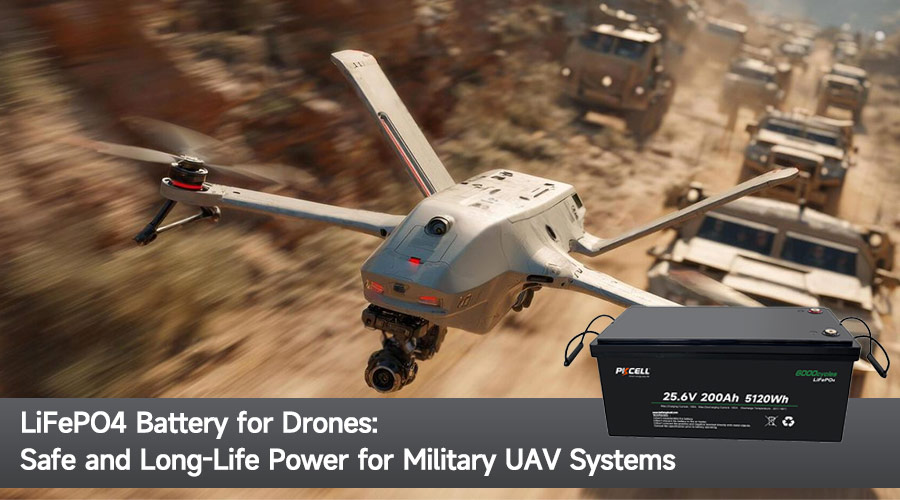
Key Highlights About LiFePO4 Drone Batteries
- Typically delivers 3,000–6,000 charge cycles.
- Offer safer chemistry than standard LiPo batteries.
- Maintain a stable discharge voltage.
- Perform reliably in demanding environments.
- Well-suited for industrial UAV modules and auxiliary power systems.
Table of Contents
1. What Is a LiFePO4 Battery?
2. Why Drone Power Systems Need High-Reliability Batteries
3. Why LiFePO4 Batteries Fit Industrial Drone Applications
4. Safety Advantages: LiFePO4 vs. LiPo vs. Li-ion
5. Typical LiFePO4 Drone Battery Configurations
6. Key Specifications to Evaluate
7. Frequently Asked Questions (FAQs)
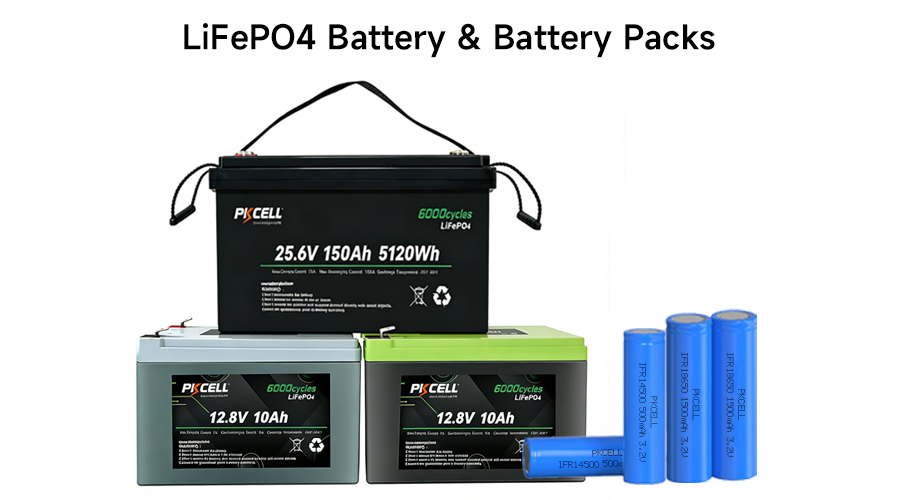
1. What Is a LiFePO4 Battery?
A LiFePO4 battery uses lithium iron phosphate as its cathode material instead of the cobalt-based materials commonly found in traditional lithium-ion batteries. That chemical difference gives the battery greater structural stability, especially under heat and load.
In practical terms, LiFePO4 batteries are known for a few defining characteristics:
- Nominal voltage: 3.2V per cell
- High thermal stability
- Long cycle lifespan
- Flat discharge voltage curve
These traits make the chemistry especially attractive for mission-critical drone subsystems, where stable output and low maintenance are often more important than maximum compactness.
2. Why Drone Power Systems Need High-Reliability Batteries
Industrial UAV operations differ significantly from recreational drone flights. In a hobby setting, a battery failure might mean a short flight or damaged equipment. In an industrial or defense setting, it can interrupt inspections, delay emergency operations, or compromise a mission entirely.
In real deployment environments, batteries may be exposed to desert temperatures, winter surveillance conditions, repeated transport shock, or long standby periods before activation.
For this reason, the drones need stable voltage for flight controllers and avionics, enough endurance for payload-heavy missions, and consistent performance across heat, cold, vibration, transport, and storage.
3. Why LiFePO4 Batteries Fit Industrial Drone Applications
LiFePO4 battery technology addresses several UAV power challenges at once, which is why it is becoming more common in industrial energy architecture.
Long Cycle Life
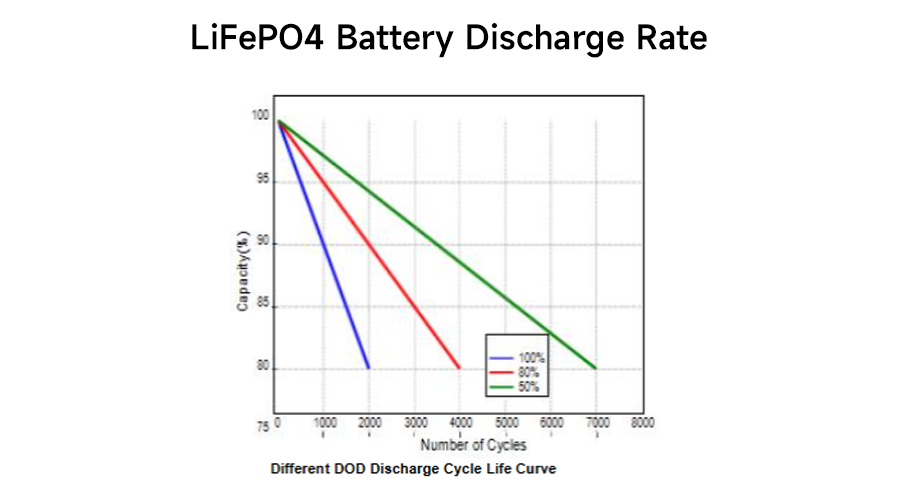
A typical LiFePO4 battery can deliver 3,000 to 6,000 cycles, far beyond the range of many conventional lithium batteries. For fleet operators, that means fewer replacements, lower long-term battery costs, and less maintenance disruption. This is especially valuable for surveillance drones, inspection UAVs, and any platform that operates on a routine schedule.
Voltage Consistency
LiFePO4 batteries tend to maintain a more consistent voltage throughout most of the discharge cycle, rather than falling off sharply.
That helps support: Stable flight controller behavior, consistent sensor output, and reliable communication module performance. For avionics and onboard electronics, that kind of steady power delivery can make a meaningful difference.
Rugged Operation
Industrial drones rarely live easy lives. Their batteries are often exposed to transport vibration, repetitive charging, physical shock, and changing climates. LiFePO4 modules generally tolerate those conditions better than more delicate battery systems, which makes them well-suited for rugged deployments.
Thermal Stability
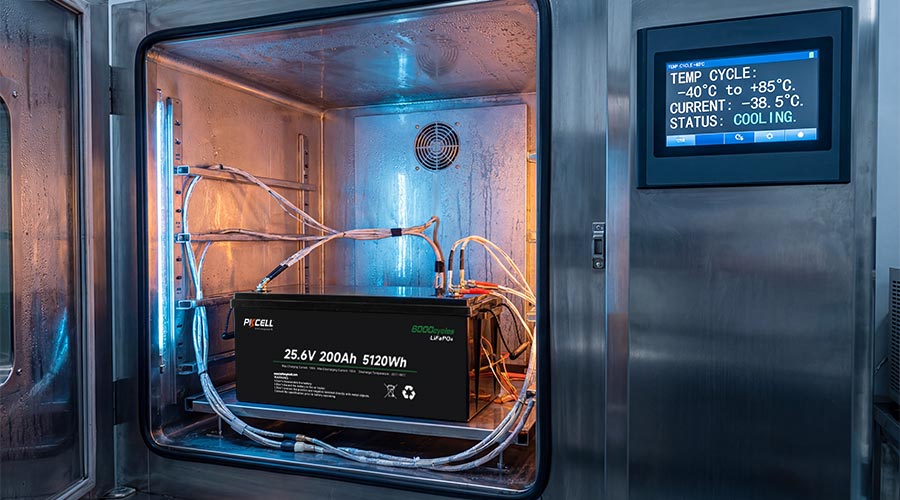
LiFePO4 chemistry is also valued for its thermal stability. It holds its structure more effectively at elevated temperatures and presents a lower risk of runaway thermal events than many other lithium chemistries.
That can reduce concerns related to:
- Battery swelling
- Combustion hazards
- Thermal runaway propagation
For field operators, those safety gains also improve overall mission confidence.
4. Safety Advantages: LiFePO4 vs. LiPo vs. Li-ion
Compared with LiPo batteries, LiFePO4 generally offers:
- Safer transport and handling
- Longer service life
- Lower overheating risk
Compared with traditional lithium-ion batteries, LiFePO4 offers:
- Better temperature tolerance
- Greater chemical and structural stability
- Longer maintenance intervals
That does not mean LiFePO4 is the right answer for every drone. Racing and performance-focused designs may still prioritize maximum energy density. But for industrial UAVs, safety and service life often outweigh the extra energy advantage of other chemistries.
LiPo vs. Li-ion vs. LiFePO4 for Drone Power Systems
| Parameter | LiPo Battery | Li-ion Battery | LiFePO4 Battery |
|---|---|---|---|
| Energy Density | Very High | High | Medium |
| Safety Level | Medium | Medium | Very High |
| Cycle Life | 500+ cycles | 500+ cycles | 3000–6000 cycles |
| Thermal Stability | Moderate | Moderate | Excellent |
| High-Temperature Resistance | Medium | Medium | Excellent |
| Long-Term Storage Stability | Medium | Good | Excellent |
| Deep-Cycle Capability | Weak | Moderate | Strong |
| Military Reliability | Moderate | Good | Excellent |
5. Typical LiFePO4 Drone Battery Configurations
Different UAV systems require different voltage platforms depending on payload demand, onboard electronics, and support equipment.
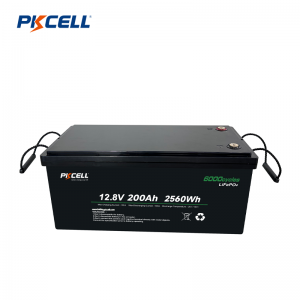
12V LiFePO4 Battery
A 12V LiFePO4 battery is often used for onboard electronics and payload systems such as:
- Communication modules
- Navigation units
- Thermal cameras
- Relay transmitters
For extended auxiliary runtime, integrators may also use LiFePO4 12V 100Ah battery modules in field-support equipment or ground stations.
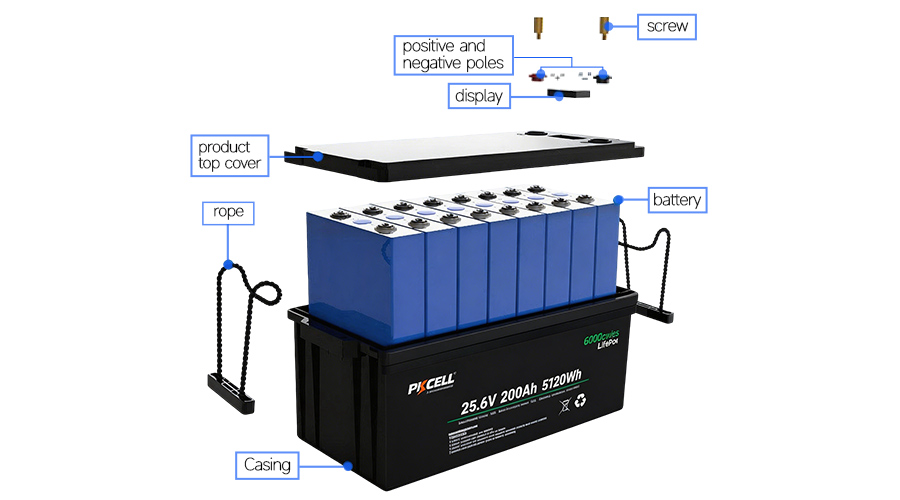
24V Battery Module
A 24V battery module is commonly used in mid-power UAV subsystems, including:
- Surveillance payload platforms
- Inspection robotics integration
- Environmental monitoring architectures
This setup can improve efficiency across distributed onboard electronics.
48V Energy Storage Battery
A 48V energy storage battery is more typical in larger support systems, such as:
- Large UAV platforms
- Mobile drone charging stations
- Field deployment support vehicles
- Temporary mission command systems
In these cases, 48V systems help simplify modular field-energy planning.
6. Key Specifications to Evaluate
Choosing the right LiFePO4 drone battery is not just about voltage. Engineers usually compare several factors together:
| Parameter | Reason |
|---|---|
| Voltage platform | Ensures compatibility with UAV electronics |
| Capacity | Determines mission endurance |
| Discharge rate | Supports propulsion and payload demand |
| Cycle life | Reduces lifecycle replacement cost |
| Temperature range | Ensures outdoor operational reliability |
In most industrial UAV projects, voltage stability and lifecycle durability are among the highest priorities.
Example: Drone Mission Runtime Calculation
Battery sizing begins with estimating total system power consumption.
Example scenario:
Payload consumption:
communication module = 45W
camera system = 30W
navigation system = 15W
control electronics = 20W
camera system = 30W
navigation system = 15W
control electronics = 20W
Total power demand: 110W
Mission requirement: 4 hours endurance
Required energy: 110W × 4h = 440Wh
Battery selection example: 12V LiFePO4 battery
Required capacity: 440Wh ÷ 12V ≈ 36.7Ah
Recommended engineering margin: 50Ah module minimum
This simple calculation framework helps integrators determine correct battery sizing before system deployment.
7. Frequently Asked Questions (FAQs)
LiFePO4 batteries generally offer longer service life and higher safety than LiPo batteries. That makes them a strong fit for industrial drones, military UAVs, and long-duration surveillance platforms.
LiFePO4 is widely regarded as one of the safest battery chemistries for drone-related applications because of its strong thermal stability and lower risk of overheating or combustion.
Yes. LiFePO4 battery modules are well-suited to military UAV applications because they provide stable power delivery, long cycle life, and dependable performance in harsh environments.
Traditional lithium-ion batteries usually offer higher energy density, while LiFePO4 batteries provide longer lifespan, better thermal stability, and stronger safety performance.
Yes. Their long cycle life, stable voltage curve, and rugged reliability make them a strong choice for persistent surveillance drones and communication relay UAV systems.
8. PKCELL: Your Professional B2B Battery Manufacturer
PKCELL is a leading manufacturer specializing in rechargeable solutions. With over 20 years of expertise, we have become a trusted partner for global sourcing departments and product engineers. Our 28,000 sqm facility and 500+ professionals produce 500,000 pieces monthly.
We also hold ISO9001, CE, and RoHS certifications. Most importantly, our batteries are UN38.3 certified, ensuring safe and compliant international shipping. Beyond the standard LiPo4 12V 100AH modules, we provide custom battery pack designs tailored to specific voltage and dimensional requirements.
Post time: Mar-26-2026


