
Introduction
The rapid expansion of renewable energy solutions is reshaping how industries and communities access power. But one truth remains clear: energy generated must be stored effectively. Without reliable energy storage batteries, even the most advanced solar or wind systems can not perform consistently.
Among many available options, the 18650 battery format has become a proven building block. Compact, powerful, and scalable, 18650 cells allow system designers to create flexible storage packs for both small and large applications.
Within this category, the ICR18650 battery stands out. As a lithium ion 18650 cell built on Lithium Cobalt Oxide (LiCoO₂) chemistry, it provides high energy density and stable performance, making it an excellent fit for renewable storage projects.
What Is an ICR18650 Battery?
The term 18650 refers to a cylindrical lithium cell 18650 with a diameter of 18mm and a length of 65mm. Over the years, this size has become the industry standard, widely used in everything from laptops to electric vehicles.
The “ICR” prefix indicates its chemistry: Lithium Cobalt Oxide (LiCoO₂). This formulation delivers one of the highest energy densities among lithium-ion chemistries, allowing more energy to be stored per unit volume. That is why it remains a strong candidate for power storage battery applications where compact design and high capacity are critical.
Core Specifications of ICR18650 Cells
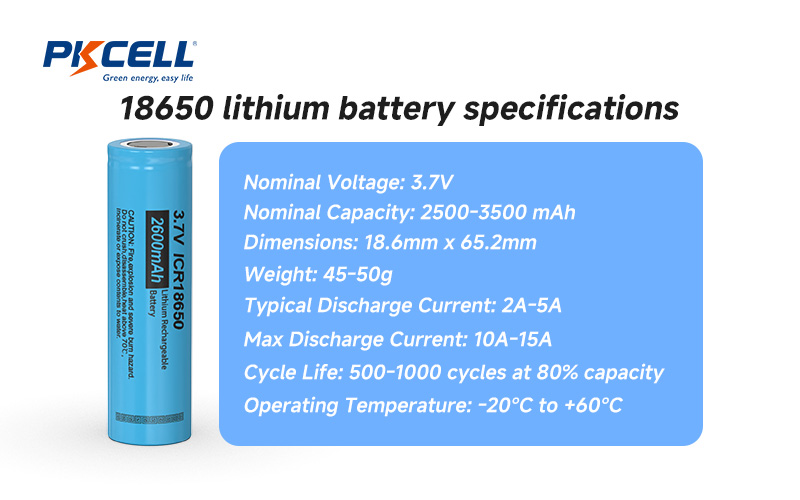
These specifications highlight why the 3.7 v lithium battery 18650 format remains versatile. It offers a balance between capacity, scalability, and affordability, critical for renewable energy solutions.
Why ICR18650 Batteries Are Suitable for Renewable Energy Storage
Renewable systems demand a battery that can combine high energy density with long-term reliability. The ICR18650 fits this profile well.
- Compact and Efficient: A high energy density ensures smaller pack sizes while delivering significant capacity.
- Scalable: Multiple 18650 rechargeable battery cells can be arranged into custom packs of 12V, 24V, or even 48V.
- Proven Performance: These cells are already deployed in solar storage, wind hybrid systems, and portable renewable banks.
- Certified for Safety: Compliance with UN38.3, CE, and RoHS ensures safe transport and international usability.
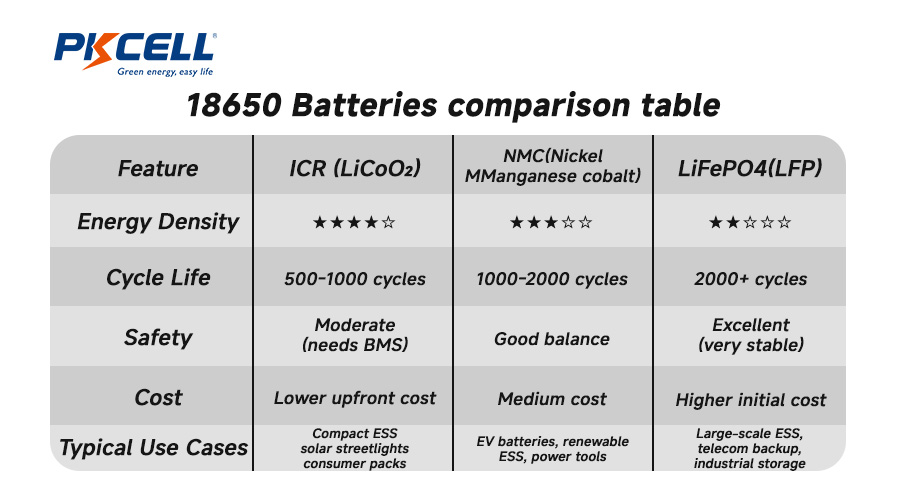
Comparison with Other Lithium Chemistries
- ICR vs. NMC battery: ICR battery offers slightly higher energy density, while NMC batteries provide a better balance of cycle life and thermal stability.
- ICR vs. LiFePO4: LiFePO4 battery excels in safety and extended cycle life, but ICR is often more cost-effective and delivers higher capacity in compact designs.
This balance makes the ICR18650 particularly suitable where energy density and affordability are key priorities.
Quote For Customized ICR18650 & 18650 Battery Pack
Applications of ICR18650 in Renewable Energy Storage
Solar Street Lighting
Solar streetlights often operate in remote areas with limited maintenance access. Here, the ICR18650 battery delivers long runtime and compact size. A 3.7v rechargeable battery pack made with ICR cells can store enough energy to keep lights operational throughout the night while withstanding daily charge-discharge cycles.
Example: Off-grid smart streetlights in industrial parks rely on lithium ion 18650 packs for stable performance. Reduced replacement frequency lowers maintenance costs for municipalities.
Residential Solar Energy Storage Systems (ESS)
In homes equipped with solar panels, ICR18650 cells are used to build modular packs. A 3.7 v lithium battery 18650 pack allows homeowners to store daytime solar energy and use it during evening hours.
The key advantage lies in cost-effectiveness. Compared to LiFePO4, ICR cells provide a more affordable solution, making residential ESS systems accessible to a wider market.
Off-Grid & Rural Electrification Projects
In rural electrification, reliability and scalability matter. The ICR18650 battery can be arranged into energy storage battery packs that support microgrids. Their smaller size and modularity offer a lower-cost alternative to large prismatic batteries.
These systems often use 18650 cells for community lighting, water pumps, and essential household devices. The result: reliable electricity access in areas where traditional infrastructure is lacking.
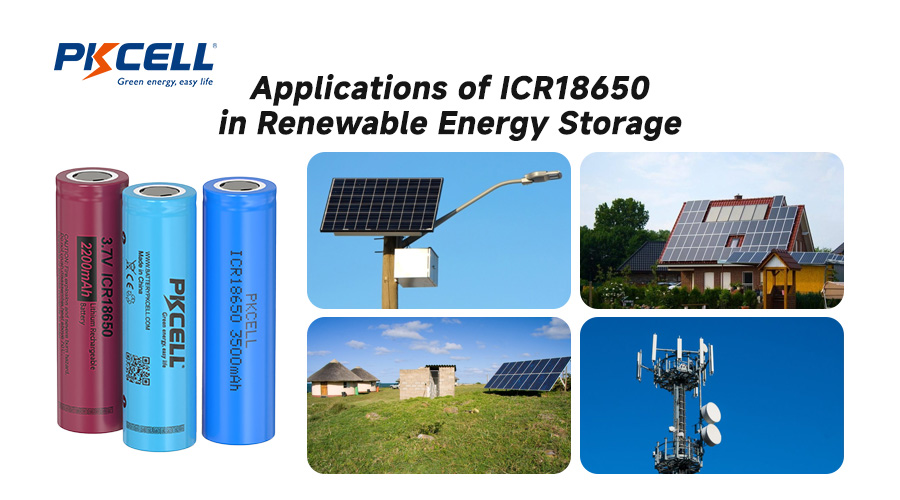
Telecom & Communication Towers
Telecom towers in remote areas need uninterrupted backup storage. ICR18650-based power storage battery packs are compact and easier to integrate into hybrid systems powered by solar or wind.
They ensure reliable uptime, supporting network stability even in regions with inconsistent grid access.
Portable Renewable Power Systems
For industries working in the field—construction, oil & gas surveys, or environmental monitoring—portable renewable power banks are crucial. Here, ICR18650 batteries provide a lightweight yet high-capacity option.
Small wind or solar chargers paired with these cells can deliver dependable off-grid energy, enabling field teams to power communication devices and tools without interruption.
Case Study: ICR18650 Batteries in Solar Storage Projects
In Southeast Asia, a project aimed at deploying solar-powered streetlights faced two challenges: affordability and reliability. Large prismatic cells were too costly, and frequent replacements were not feasible.
The solution came in the form of ICR18650 battery packs. Engineers assembled modular packs using 3.7 v lithium battery 18650 cells, ensuring sufficient capacity for nightly lighting.
Results:
- Streetlights achieved stable operation for over three years with minimal maintenance.
- Cost per unit dropped significantly compared to LiFePO4 alternatives.
- Municipalities reported fewer outages and higher satisfaction with the systems.
This case underscores the practical advantages of ICR18650 batteries in renewable applications.
Choosing the Right Supplier for ICR18650 Renewable Applications
Not all suppliers are equal when it comes to 18650 rechargeable battery solutions. When selecting a partner, OEMs and system integrators should look for:
- Comprehensive Datasheets: Transparency in specifications helps avoid mismatched performance.
- Certifications: Ensure UN38.3, CE, and RoHS compliance.
- Customization: Ability to provide tagged leads, BMS integration, or custom packaging.
- Reliable Supply Chain: Bulk orders require stability in production and delivery.
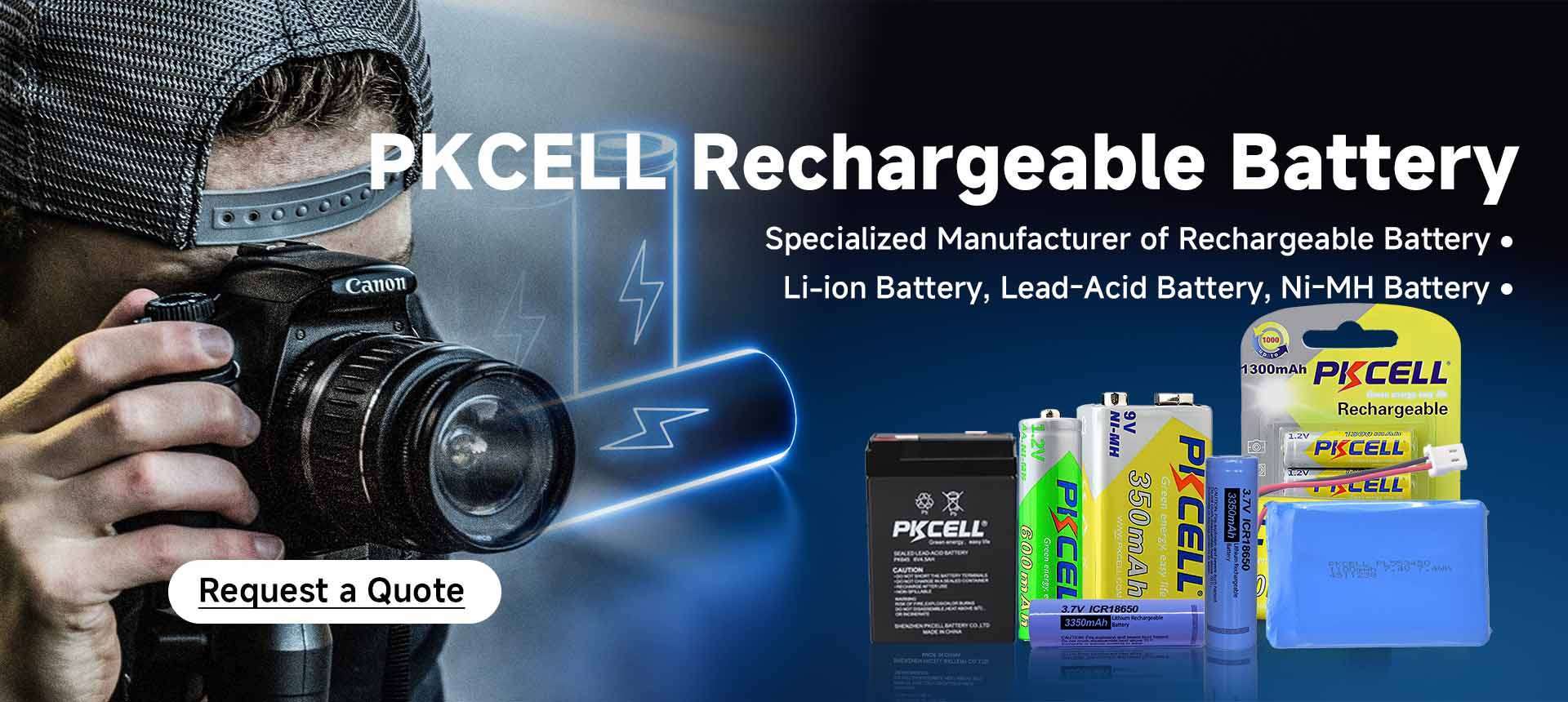
Working with an established supplier like PKCELL means access to quality-assured lithium cell 18650 products, engineered for renewable projects worldwide.
Conclusion: Unlocking Renewable Energy Storage with ICR18650
The ICR18650 battery is more than just a standard 3.7v rechargeable battery. It represents a balance of energy density, scalability, and affordability, making it one of the most practical solutions for renewable energy projects worldwide.
From solar streetlights to telecom towers, it delivers consistent results while keeping costs manageable. For OEMs, R&D teams, and system integrators, ICR18650 cells open the door to flexible designs that can grow with project needs.
FAQs About ICR18650 for Renewable Energy Storage
Q1: What is the lifespan of an ICR18650 battery in renewable storage?
A: Typically 500–1000 cycles, depending on depth of discharge and conditions.
Q2: Can ICR18650 batteries be scaled into large ESS packs?
A: Yes. Multiple cells can be assembled into high-voltage packs for residential and commercial systems.
Q3: What’s the difference between ICR18650 and LiFePO4 cells?
A: ICR offers higher energy density and lower upfront cost, while LiFePO4 delivers longer cycle life.
Q4: Are ICR18650 batteries safe outdoors?
A: Yes, with proper integration of a Battery Management System (BMS) for overcharge and temperature control.
Q5: Which certifications are needed?
A: UN38.3, CE, and RoHS are standard for global shipping and compliance.
Post time: Sep-18-2025


