
Key Highlights: 21700 vs 18650 Battery Cells
Quick answer: A typical 21700 cell measures about 21 × 70 mm; an 18650 measures about 18 × 65 mm. A 21700 cell generally has greater capacity potential because of its larger volume. However, discharge current, energy density, charging time, cycle life and thermal performance depend on the specific cell model, not its size code alone.
- Choose 18650 when the enclosure is compact, an existing product is designed around 18650 cells, or pack-layout flexibility is important.
- Consider 21700 when there is enough space and greater energy per cell could reduce the number of cells in a new design.
- For high-drain devices: compare manufacturer-rated continuous current, peak current, voltage sag and temperature under the actual load.
- For replacements: never assume that matching nominal voltage makes different cell sizes interchangeable.

Introduction: How Do You Choose Between 21700 and 18650?
When comparing 21700 vs 18650 battery cells, the first differences to check are dimensions, available energy, device fit and discharge requirements. Both formats are widely used in rechargeable lithium-ion products, including portable electronics, power tools and custom battery packs. Neither format is automatically better for every application.
The 21700 format offers more physical room for energy storage. The smaller 18650 format can fit compact enclosures and mature battery-pack designs. For engineers and OEM buyers, the correct decision also depends on cell chemistry, continuous discharge current, thermal management, charger compatibility and total pack cost.
21700 vs 18650 Battery: Key Differences
The table below summarizes the most useful differences for battery selection. It avoids treating capacity, power output or cycle life as fixed characteristics of a cell size.
| Comparison | 18650 Battery | 21700 Battery |
|---|---|---|
| Nominal dimensions | 18 mm diameter × 65 mm length | 21 mm diameter × 70 mm length |
| Physical cell volume | Smaller baseline | About 47% larger by nominal cylindrical geometry |
| Nominal voltage | Often 3.6–3.7V for common Li-ion chemistries | Often 3.6–3.7V for common Li-ion chemistries |
| Capacity potential | Generally lower per cell in comparable designs | Generally higher per cell in comparable designs |
| Energy density (Wh/kg or Wh/L) | Depends on actual cell specification | Depends on actual cell specification |
| Continuous discharge current | Model-dependent; high-drain options exist | Model-dependent; high-drain options exist |
| Cycle life | Depends on chemistry and test conditions | Depends on chemistry and test conditions |
| Weight per cell | Usually lower | Usually higher |
| Battery-pack design | Useful in smaller, established layouts | May reduce cell count for some energy targets |
| Direct replacement | Not generally interchangeable without explicit device approval and electrical, mechanical and charging checks | |
Understanding 21700 and 18650 Lithium-Ion Batteries
The numbers in each cell name describe the approximate format: 18650 refers to an 18 mm diameter and 65 mm length, while 21700 refers to 21 mm and 70 mm. Both names identify sizes, not specific chemistries, capacities or current ratings. For example, some cylindrical cells use chemistries with different nominal voltages and charging requirements.

21700 Battery Cells: Features and Typical Applications
A 21700 cell has more physical volume than an 18650. This often supports higher energy per cell in comparable product families, making it attractive for new packs designed around capacity or cell-count goals. There are also high-current 21700 models, but the format itself does not guarantee a particular discharge rating.
- Portable power systems: useful when energy per cell and available enclosure space suit the design.
- Power tools and mobility equipment: selected models can support demanding loads when appropriately rated and cooled.
- Custom OEM packs: fewer cells may help simplify some electrical interconnections, depending on the required voltage and energy.

18650 Battery Cells: Features and Typical Applications
The 18650 is a compact, widely established cylindrical format. It remains useful where equipment already supports this size or where a smaller cell offers better packaging flexibility. Both energy-oriented and high-drain 18650 variants are available, so the right model depends on the device load.
- Flashlights and portable instruments: suitable for equipment specifically designed for 18650 cells.
- Battery packs: flexible layouts can be useful for constrained products and replacement programs.
- Industrial electronics: suitable where validated performance, supply continuity and compact packaging are important.
21700 vs 18650: Capacity, Energy and Energy Density
A 21700 cell may have a higher mAh capacity because it has more internal space, but capacity alone is not the same as energy density. Battery energy can be estimated in watt-hours:
Energy (Wh) = Nominal voltage (V) × Capacity (mAh) / 1,000
As a simple product-level illustration, a 3.7V, 3,000mAh cell stores about 11.1Wh nominally, while a 3.7V, 5,000mAh cell stores about 18.5Wh. The second stores more total energy, but a fair Wh/kg or Wh/L comparison also needs weight or actual dimensions, and both cells must be evaluated under comparable discharge conditions.
PKCELL provides examples of a 3.7V 3000mAh 18650 lithium-ion battery and a 3.7V 21700 lithium-ion battery family. These product examples illustrate possible specifications, not a controlled performance test between matched models.
21700 vs 18650: Discharge Current, Charging and Cycle Life
Discharge Current and Power Output
Do not assume that every 21700 battery produces more current than every 18650 battery. A high-power 18650 cell may outperform an energy-optimized 21700 cell under heavy load. Compare rated continuous current, peak-current conditions, voltage sag and temperature rise using manufacturer datasheets.
Charging Time and Charger Compatibility
Charging time depends on starting state of charge, cell capacity, allowed charge current, charger settings and the final constant-voltage phase. A larger-capacity cell may take longer at the same charging current, but cell size alone does not set charging speed.
Some multi-size chargers accept both 18650 and 21700 cells. Always verify that the charger supports the cell’s physical length, chemistry, voltage limits, charging current and polarity. A matching cylindrical shape does not guarantee safe charging.
Cycle Life and Temperature
Neither 21700 nor 18650 has an inherent cycle-life advantage. Cell chemistry, depth of discharge, charge limits, load current and temperature determine aging. Similarly, thermal performance depends on internal resistance and pack cooling; do not use cell size as a substitute for thermal testing.
Pros and Cons of 21700 Battery Cells
Advantages of 21700 Batteries
- Higher capacity potential: more internal volume can provide greater energy per cell in comparable designs.
- Possible lower cell count: certain packs can reach an energy target with fewer cells, although series/parallel requirements still govern the design.
- Available power-focused options: high-drain 21700 models can serve demanding applications when their ratings are sufficient.
Limitations of 21700 Batteries
- Larger dimensions: unsuitable for many enclosures designed strictly around 18650 cells.
- More mass per cell: overall system weight still depends on the cell count and pack design.
- Design-specific economics: cost, lead time and thermal needs vary by model, volume and supplier.
Pros and Cons of 18650 Battery Cells
Advantages of 18650 Batteries
- Compact format: fits many established devices and small battery compartments.
- Mature ecosystem: broad availability of holders, packs and cell specifications.
- Flexible pack arrangement: smaller cells may fit constrained or irregular available spaces.
Limitations of 18650 Batteries
- Less energy per cell in many comparable designs: some packs need more cells to meet the same total energy target.
- More connections in some larger packs: additional cells can increase the importance of matching, interconnect design and quality control.
- No automatic thermal or cycle-life advantage: always verify performance from the specific model datasheet.
How to Choose Between 21700 and 18650 Battery Cells
Use these steps for an existing device replacement or a new OEM battery-pack design:
- Confirm physical compatibility: check diameter, length, terminal style, protection-board length, holder tolerance and available installation space.
- Confirm chemistry and voltage: verify nominal voltage, full-charge voltage, cutoff and charger requirements. Not every cell using these dimensions has identical chemistry.
- Calculate energy needs: estimate operating power and target runtime, then compare required pack watt-hours (Wh) rather than mAh alone.
- Check load current: select cells with appropriate continuous and peak discharge ratings, allowing for temperature and voltage sag.
- Review pack configuration: determine series (S) and parallel (P) cell counts, BMS design, balancing needs and connection layout.
- Evaluate thermal and mechanical risks: check cooling, vibration, clearances, insulation and short-circuit protection.
- Compare total project cost: evaluate cell pricing alongside holders, spot welding, BMS, assembly, validation, availability and maintenance.

Can You Replace an 18650 Battery with a 21700?
Usually not as a direct swap. The 21700 is approximately 3 mm wider and 5 mm longer. A device must explicitly accommodate the alternate format, and the selected chemistry, voltage, terminals, charger and protection design must be compatible. Do not force a larger cell into an 18650 holder or bypass protection to make a replacement fit.
For an OEM redesign, moving from 18650 to 21700 can be reasonable, but it requires updated mechanical and electrical verification rather than assuming drop-in interchangeability.
Choosing 18650 or 21700 Cells for OEM Battery Packs
For industrial and OEM products, the right cell depends on the complete system: required pack voltage, usable energy, available space, current demand, charging control, thermal design and manufacturing requirements. PKCELL offers cylindrical lithium-ion cells and battery-pack solutions that can be reviewed against a project’s specifications.
- Review cylindrical Li-ion cell and battery-pack options.
- Explore 18650 battery products and 18650 battery pack solutions.
- For 21700-related specifications, see PKCELL’s 21700 cell product family.
Need Help Choosing 18650 or 21700 Battery Cells?
Share your device dimensions, nominal voltage, required runtime, discharge-current profile, operating temperature, estimated order quantity and connector requirements. PKCELL can discuss suitable cell specifications and OEM battery-pack options for your project.
Frequently Asked Questions About 21700 vs 18650
What is the main difference between 21700 and 18650 batteries?
The primary difference is size: 21700 is approximately 21 mm by 70 mm, while 18650 is about 18 mm by 65 mm. The larger 21700 format often offers greater capacity per cell. Discharge current, energy density and cycle life depend on the specific model.
Can I use a 21700 battery in place of an 18650?
Not in most devices without explicit manufacturer approval. A 21700 cell is larger and may differ in terminal style, protection arrangement, chemistry and electrical ratings. Confirm all requirements before replacement.
Can 18650 and 21700 batteries use the same charger?
Some chargers accept both formats. Check charging-slot dimensions, supported lithium chemistry, charge voltage, current rating, polarity and the cell maker’s instructions. Never use an incompatible charger.
Which battery lasts longer: 21700 or 18650?
A suitable higher-energy 21700 cell may offer longer runtime in a compatible device, but runtime is not the same as cycle life. Cycle life depends on chemistry, temperature, charge settings, load and depth of discharge.
Is a 21700 battery always more powerful than an 18650?
No. Maximum discharge current and power depend on the exact cell specification. A high-drain 18650 cell can deliver more current than a capacity-focused 21700 model.
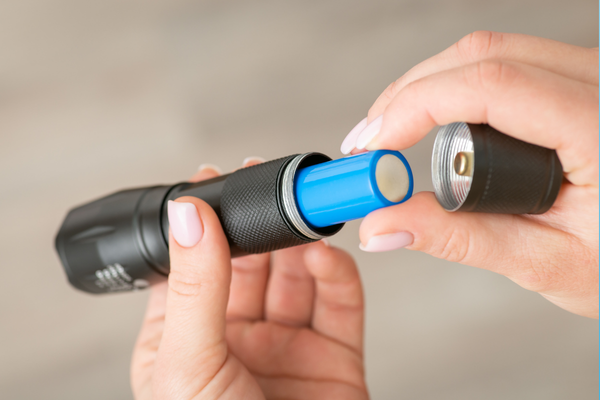
Can I put a 21700 battery in an 18650 flashlight?
Only if the flashlight maker explicitly lists the 21700 format as compatible. Verify battery-compartment dimensions, contacts, voltage, chemistry and charging arrangements. Do not force a cell or assume that an adapter makes a design safe.
Conclusion: Which Cell Should You Choose?
When choosing between 21700 and 18650 battery cells, start with device compatibility, required watt-hours and current demand. A 21700 can be attractive where higher capacity per cell helps the pack design; an 18650 can be preferable for a compact enclosure or established product platform. Neither format guarantees superior cycle life, cooling or discharge performance.
For a reliable decision, compare actual datasheets and validate cells under the intended charging, temperature and load conditions before production.

Post time: Mar-31-2025


