
Key Highlights
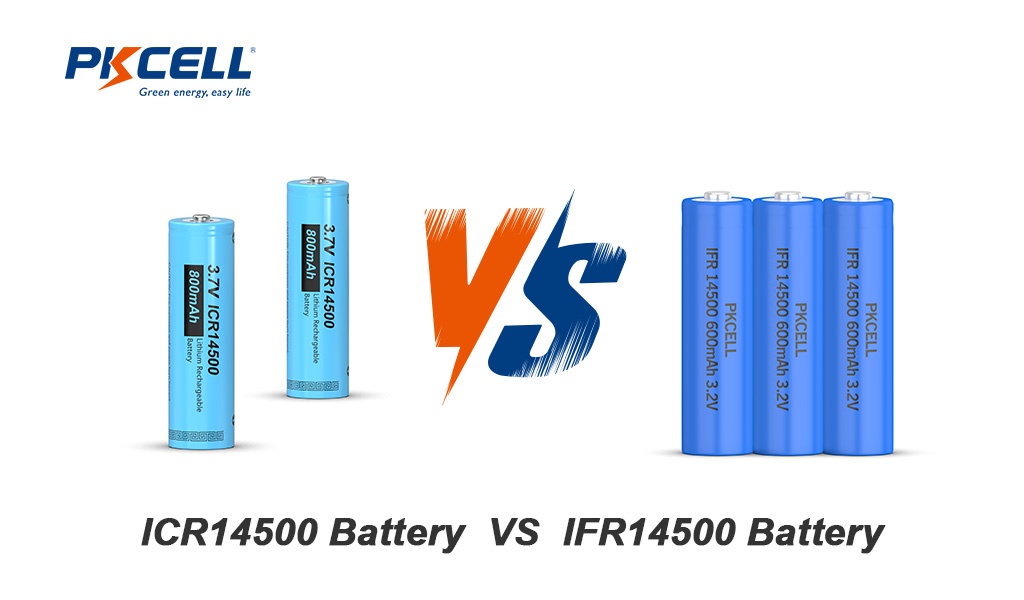
- ICR14500 and IFR14500 rechargeable battery types offer distinct lithium chemistries and nominal voltage levels.
- Knowing which battery fits best for battery replacement in devices like remote control cars is crucial.
- ICR batteries generally excel in energy density, while IFR batteries shine in presence and durability in solar lights and other applications.
- Understanding performance in diverse scenarios, such as flashlights and other battery packs, is essential.
- Stay informed on safety tips and compatible chargers when handling lithium-based batteries.
- Compare key specifications to make the right choice for specific applications.
Introduction
When you need a rechargeable battery for your power supply, the 14500 series is a great choice. ICR14500 and IFR14500 batteries are small but strong. They work well as a battery replacement in many things like flashlights and remote control cars. Both kinds have different features that affect how they work, how safe they are, and what devices they fit. Knowing the good points and best uses for each one will help you get the right battery for your device.
Next, we will talk about what makes ICR14500 batteries different.
Understanding ICR14500 Batteries: The Lithium-ion Standard
The ICR14500 battery represents the standard lithium-ion chemistry within the 14500 form factor. Known for their high energy density, these batteries are a go-to choice when maximum power in a compact package is desired.
Chemistry and Voltage
ICR14500 batteries are typically based on Lithium Cobalt Oxide (LiCoO2) chemistry. This specific composition gives them a higher nominal voltage of 3.6V or 3.7V. When fully charged, an ICR14500 battery reaches approximately 4.2V. This higher voltage means a single ICR14500 can often power devices that would otherwise require multiple traditional AA batteries, simplifying design and reducing battery count.
Capacity and Energy Density
One of the main advantages of ICR14500 batteries is their impressive energy density. This characteristic allows them to pack a significant amount of electrical energy into a small volume. Consequently, they often boast higher capacities compared to IFR14500 batteries of the same size, typically ranging from 700mAh to 900mAh. This higher capacity translates to longer run times for compatible devices.
Performance Characteristics
ICR14500 batteries generally exhibit a gradual voltage drop throughout their discharge cycle. While they can deliver consistent power for many applications, they are typically not designed for high-drain (high-current) applications. Pushing them beyond their recommended discharge rates can lead to excessive heat generation, reduced efficiency, and potentially compromise safety. Their cycle life, or the number of full charge-discharge cycles they can endure before significant capacity degradation, is usually in the range of 300 to 500 cycles.
Exploring IFR14500 Batteries: The LiFePO4 Alternative
The IFR14500 battery, built on Lithium Iron Phosphate (LiFePO4) chemistry, offers a compelling alternative to ICR batteries, particularly where safety, stability, and longevity are paramount.
Chemistry and Voltage
IFR14500 batteries utilize Lithium Iron Phosphate (LiFePO4) as their cathode material. This chemistry inherently provides a lower nominal voltage of 3.2V. A fully charged IFR14500 battery will typically measure around 3.6V. While this voltage is lower than that of ICR cells, the LiFePO4 chemistry offers distinct advantages in terms of stability.
Capacity and Energy Density
Due to the inherent characteristics of LiFePO4 chemistry, IFR14500 batteries generally have a slightly lower energy density compared to ICR cells. This means that for the same physical size, an IFR14500 battery might offer a lower capacity, often in the range of 500mAh to 600mAh. While this could translate to slightly shorter run times in some applications, it is often a trade-off for other performance benefits.
Performance Characteristics
One of the standout features of IFR14500 batteries is their incredibly stable discharge voltage plateau. This means that during discharge, the voltage remains remarkably consistent for the majority of the battery’s usable capacity, making them ideal for devices that require a steady power supply. Furthermore, IFR14500 batteries excel in high-drain applications, capable of delivering high currents without significant voltage sag or excessive heat. Their most significant advantage is their exceptional cycle life, often exceeding 1000 to 2000 full charge-discharge cycles, making them a very durable and long-lasting power solution.
Now, let’s go over the detailed comparison between ICR and IFR batteries.
Key Differences: ICR14500 vs IFR14500 at a Glance
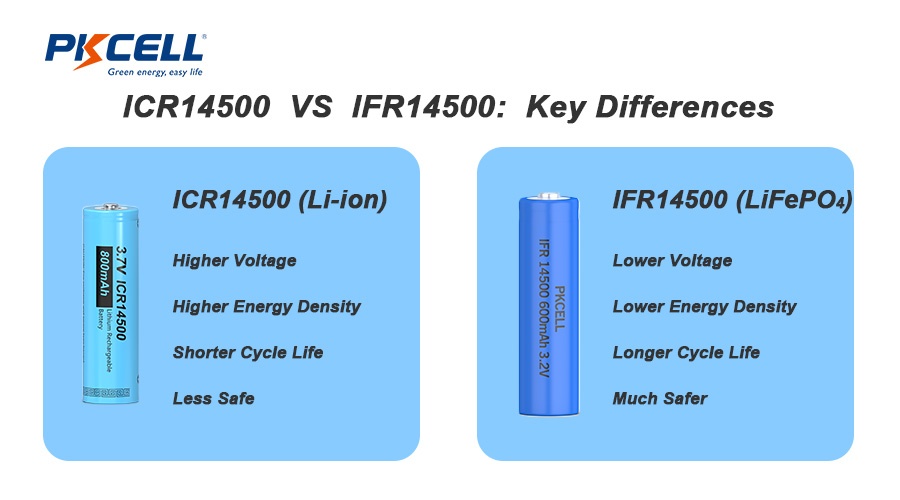 The two 14500 battery types, ICR (Lithium-ion) and IFR (LiFePO4), are not the same. They have different chemistry, nominal voltage, and ways in which people use them. ICR batteries have a higher energy density and power output. In contrast, IFR batteries last longer and have more safety features.
Direct Comparison Table
To simplify your decision-making process, here’s a direct comparison of the key attributes of ICR14500 and IFR14500 batteries:
| Feature | ICR14500 (Lithium-ion) | IFR14500 (LiFePO4) |
| Chemistry | Lithium Cobalt Oxide (LiCoO2) | Lithium Iron Phosphate (LiFePO4) |
| Nominal Voltage | 3.6V / 3.7V | 3.2V |
| Fully Charged V | 4.2V | 3.6V |
| Energy Density | Higher | Lower |
| Capacity (mAh) | Generally Higher | Generally Lower |
| Discharge Curve | Gradual voltage drop | Flat, stable voltage plateau |
| High Drain Perf. | Not ideal | Excellent |
| Cycle Life | 300-500 cycles | 1000-2000+ cycles |
| Safety | Lower (prone to thermal runaway) | Higher (very stable) |
| Operating Temp. | Narrower | Wider |
| Cost | Lower Initial Cost | Higher Initial Cost |
Making Your Choice: Which 14500 Battery is Right for You?
Selecting between an ICR14500 and an IFR14500 ultimately comes down to matching the battery’s characteristics with your specific device and usage patterns.
Assess Your Device’s Requirements
Your device type is the first thing to look at when you pick between ICR and IFR14500 batteries. Think about these points:
- Voltage compatibility: You need to see if your device uses 3.7V (ICR) or 3.2V (IFR) voltage.
- Connector type: Be sure that the battery connector is right for your device.
- Usage demands: If you have a device that uses up a lot of energy, ICR batteries might work better.
- Specific applications: For something like solar lights or safe uses, IFR batteries can be a better choice.
Looking at these basics will help you pick the right rechargeable battery for your needs.
Prioritize Safety
Safety should always come first when you pick lithium batteries. You can follow these tips:
- Compatible charger: You should always use the right charger for your battery. For example, use the charger that comes with RC cars.
- Safe shipping practices: When shipping, pack the batteries well. This stops leaks and stops short-circuiting.
- Risk management: Pick LiFePO4 (IFR) batteries if you care more about safety than how high it can perform.
By doing all this, you help stop accidents and the batteries will last and work well for a longer time.
Consider Usage Frequency and Lifespan Needs
How often you use the device should help you choose the right rechargeable battery. Devices you use a lot or for tough jobs do well with IFR batteries because they last longer.
But if you need high discharge, like in flashlights, ICR batteries work better as they give out more power when you need it. Think about these points:
- Discharge regularity: If you replace batteries often, you might like how strong and steady IFR batteries are.
- Application longevity: IFR batteries last longer, so they are good for things you use over the years.
What you want most, easy battery replacement or long life, will guide you to the right choice for your rechargeable battery. The best one for you depends on usage and your day-to-day needs.
Budget vs. Long-Term Value
While ICR14500 batteries often have a lower upfront cost, their shorter cycle life means you might need to replace them more frequently. IFR14500 batteries, despite a higher initial investment, can prove to be more economical in the long run due to their extended lifespan. Consider the total cost of ownership rather than just the purchase price.
Specific Application Examples
Here’s what you get with both batteries in different uses:
- Flashlights: The ICR battery is good for longer, high-energy usage.
- Remote control cars: Both can be used, but IFR will give you steady play for a longer time.
- Solar lights: IFR batteries are best for steady and lasting output.
- Heavy discharge tools: ICR batteries work well when you need quick bursts of energy.
Are these things important to you? If you know their strengths, it helps you decide which one to use for your needs in things like solar lights, remote control cars, and flashlights.
Why Consider PKCELL 14500 Batteries for Your Devices?
When navigating the complexities of battery chemistry, the brand you choose plays a vital role in ensuring reliability and performance. PKCELL has established itself as a reputable manufacturer in the battery industry, offering a wide range of power solutions, including both ICR14500 and IFR14500 batteries. Opting for PKCELL 14500 batteries means investing in products known for their consistent quality, dependable output, and adherence to manufacturing standards. Whether your priority is the high energy capacity of ICR for extended runtimes or the robust safety and exceptional longevity of IFR for critical applications, PKCELL provides a trustworthy option to efficiently and safely power your electronic devices.
Conclusion
To sum up, picking between ICR14500 and IFR14500 batteries comes down to what you need the battery to do. The ICR14500 batteries usually give you more power in a smaller size, which can be good for devices using standard lithium-ion batteries. On the other hand, IFR14500 batteries last longer and are safer due to their LiFePO4 chemistry. The best way to choose is to look at what your device requires, how important safety is for you, and how much you want to spend compared to what you get over time. If you want to try a new type or need more help, you can get quotes and see the best lithium battery choices for you.
If you’re considering this battery for your project or need expert advice on the best solution, feel free to reach out for a free consultation. We’re here to help you choose the right power solution for your needs.
Frequently Asked Questions
1. Are 14500 batteries interchangeable with AA batteries?
No, you cannot use 14500 batteries in place of AA batteries because these two have different voltage levels. AA batteries usually give 1.5V and fit in many devices without any issue. But 14500 rechargeable batteries have a nominal voltage of 3.7V or 3.2V. So, your devices need to be made to handle this higher voltage. Always check if your device can work with this type of battery before you use it.
2. Can I use an ICR14500 battery in any device that takes a 14500 battery?
Not always. Some devices only need a lower voltage and may not work safely with ICR14500 batteries. These run at 3.7 volts, which may be too high for lots of devices. You should always check if the voltage and lithium battery type will work with your device before use. The way you use your device matters a lot when you pick a power source.
3. Is it safe to charge ICR14500 and IFR14500 batteries with the same charger?
It is true that some chargers can handle many different voltage levels. However, it is safer to use a charger that is made for ICR batteries with 3.7V or for IFR batteries with 3.2V. If the charger does not handle the right voltage, there can be damage to the battery or the device when you use it. This is why you should be careful with charger usage and the voltage you set for your batteries.
Post time: Jul-15-2025


