
Key Highlights
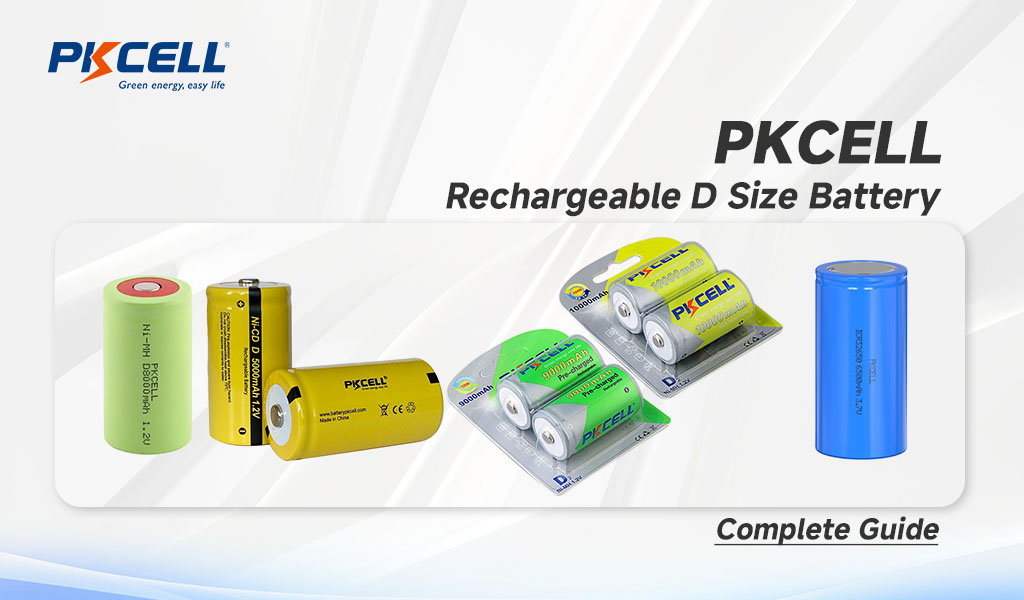
- Rechargeable D size batteries are an excellent alternative to disposable options, specifically for high-energy electronic devices such as lanterns and flashlights.
- These batteries offer long-lasting power, minimizing frequent replacements and reducing costs over time.
- Rechargeable D size batteries support environmentally friendly choices by significantly cutting down waste associated with disposable batteries.
- Various types, including NiMH, NiCd, and lithium-ion battery, cater to differing power needs and performance requirements.
- Comparisons reveal that rechargeable batteries provide better long-term value due to their reusability and durability.
Introduction
D-size batteries are a strong, reliable choice for many electronic devices at home and at work. As more people want better efficiency, replacement D cell batteries, particularly rechargeable ones, have become much more popular as another choice for single-use batteries. You will see these batteries used a lot in things that need lots of power like flashlights, lanterns, and remote controls. If you want to save money, cut down on waste, and make sure your gadgets work well, this guide will help you know why and how to pick the right rechargeable D size batteries.
Why Rechargeable D Size Batteries Are a Smart Move
Making the switch to rechargeable D size batteries isn’t just a trend; it’s a practical decision that offers significant advantages for both your wallet and the planet.
Smart Savings and Environmental Benefits
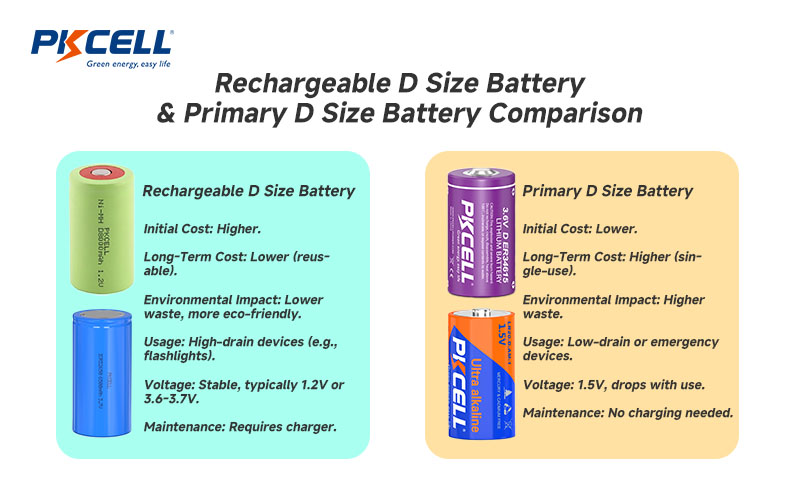
Choosing rechargeable batteries over disposable ones saves a lot of money if you use them often. At first, rechargeable D cell batteries might cost more compared to something like Coppertop alkaline batteries. But since you can keep reusing and charging them, you spend less money as time goes by. You do not need to buy a count pack again and again. You only need to recharge your D cell batteries, so you pay less for replacements.
There are also good environmental reasons to choose rechargeable D batteries. When you use them, you do not throw away as many batteries. This helps keep batteries out of landfills and lowers pollution. If you have regular use of electronic devices at home, choosing rechargeable batteries can really help the environment.
You can buy rechargeable batteries like NiMH and NiCd, which are available for many d cell and d batteries. These work with many electronic devices and still give reliable power. Because of this, rechargeable d cell batteries are a great option for you if you want to save money, help the environment, and still get a good and solid power supply.
Decoding Rechargeable D Size Batteries: Understanding All the Types
This section focuses exclusively on the diverse world of rechargeable D size batteries, detailing their chemistries, advantages, and ideal applications.
NiMH (Nickel-Metal Hydride) D Batteries: The Popular Rechargeable Standard
NiMH D batteries are the most common and versatile rechargeable options for the D size, typically providing a nominal voltage of 1.2V. While slightly lower than alkaline’s 1.5V, most modern devices are designed to tolerate this difference seamlessly.
- Pros: The biggest advantage is their reusability – they can be recharged hundreds of times (500-1000+ cycles), making them incredibly cost-effective over time and highly environmentally friendly. They perform well in moderate to high-drain devices, delivering consistent power. This high cycle life directly translates to long-term operational efficiency.
- Cons: They have a higher initial cost compared to disposables. Standard NiMH batteries can experience self-discharge, losing charge when not in use. However, this is largely mitigated by Low Self-Discharge (LSD) NiMH D Batteries.
- Key Feature: Low Self-Discharge (LSD) NiMH D Batteries: These advanced versions retain a significant portion of their charge (e.g., 70-85%) even after a year of storage. This “ready when you are” feature makes them ideal for items used intermittently, emergency kits, or for efficient stockpiling and inventory management.
- Best Use Cases: Perfect for kid’s toys, powerful flashlights, portable radios, and emergency lighting.
Rechargeable Lithium D Batteries (Specialty & High-Performance Options)
These are less common in the D size but represent the pinnacle of rechargeable technology, offering unique advantages for specific applications. They utilize various Lithium-ion and Lithium Thionyl Chloride chemistries.
- Voltage: Depending on the design, they might provide a regulated 1.5V output (via an internal converter for compatibility with alkaline-designed devices) or a higher native voltage (e.g., 3.2V-3.7V), which requires specific device compatibility.
- Pros: They boast extremely high energy density, very low self-discharge, and an exceptionally long cycle life (1000-2000+ cycles). Their performance in extreme temperatures is outstanding. This emphasizes top-tier performance for demanding professional equipment.
- Cons: They have the highest cost among D batteries and are less common in this size. They may also require specialized chargers or specific device compatibility.
- Best Use Cases: Tailored for specialized, high-performance applications where ultimate power, longevity, and consistent output are paramount and where project budget allows for premium solutions.
Older/Less Common Rechargeable D Battery Types
NiCd (Nickel-Cadmium) D Batteries: Briefly mention these as older chemistry, now largely replaced by NiMH due to their “memory effect” and environmental concerns (containing cadmium). Rarely recommended for new purchases.
D Size Battery Type Comparison: Why Rechargeable D Batteries Win Long-Term
This comparison highlights the key differences and, crucially, showcases where rechargeable D batteries truly provide superior long-term value and performance over their disposable counterparts.
| Feature | Alkaline D Batteries(primary cell) | Primary Lithium D Batteries(primary cell) | NiMH Rechargeable D Batteries (LSD) | Rechargeable Lithium D Batteries (1.5V) |
| Initial Cost | Low | High | Moderate | High (Premium) |
| Cost Over Time (Value) | High (Repeated Purchase) | High (Repeated Purchase) | Very Low (Hundreds of Recharges) | Extremely Low (Thousands of Recharges) |
| Reusability | No (Single Use) | No (Single Use) | Yes (Up to 1000+ cycles) | Yes (Up to 2000+ cycles) |
| Environmental Impact | Moderate (More Waste) | Low (Less Waste) | Excellent (Very Low Self-Discharge) at Walmart Stores | Very Low (Significantly Reduced Waste) |
| Ready-to-Use After Storage | Excellent (Long Shelf Life) | Excellent (Long Shelf Life) | Excellent (LSD: Retains 70-85% for 1yr+) | Excellent (Very Low Self-Discharge) |
| Performance in High-Drain Devices | Drops Quickly | Excellent | Very Good (Consistent Power) | Outstanding (Consistent Power) |
| Temperature Range | Standard | Wide (Extreme Cold/Hot) | Standard | Wide (Extreme Cold/Hot) |
| Memory Effect | No | No | No | No |
| Best For | Occasional, Low-Drain | Critical, Extreme Conditions | Frequent Use, Everyday Devices | Specialty, Peak Performance Needs |
How to Choose the Right Rechargeable D Size Battery for Your Needs
Choosing the right rechargeable D size battery depends on a few important points. First, check what voltage your electronic devices need. Most rechargeable D size batteries use NiMH or NiCd. The mAh rating tells you how long the battery will last. Think about how often you will use your d cell batteries, like in flashlights or remote controls. It is a good idea to stick with trusted brands such as PKCELL if you want a d cell that fits what you need. This helps your devices work well and last longer.
Step 1: Evaluate Your Device’s Power Requirements
First, consider the demands of the device you’re powering.
- Is it a high-drain device like a powerful LED flashlight, a large motor-driven toy, or professional equipment such as security systems? These devices demand a lot of power quickly and consistently. For them, rechargeable NiMH and Rechargeable Lithium D batteries excel, providing the sustained current they need.
- Is it a low-drain device such as a simple clock, remote control, smoke detector, or sensors that require minimal, steady power over long periods? While most rechargeable options work, LSD NiMH batteries are particularly convenient due to their inherent readiness after long periods of inactivity.
- Actionable Tip: If unsure, consult your device’s manual or consider consulting with the equipment manufacturer for precise power recommendations.
Step 2: Determine Your Usage Frequency
How often will you be using the D size battery? This significantly impacts your best choice.
- Daily/Weekly Use: For devices you use very often (e.g., everyday flashlights, kids’ favorite toys), rechargeable NiMH D batteries (especially LSD variants) are the most economical and convenient choice due to their reusability and operational efficiency.
- Occasional Use (monthly/quarterly): LSD NiMH rechargeable D batteries are highly recommended here. They combine the readiness of disposables with the excellent long-term savings of rechargeables.
- Infrequent Use / Emergency Backup (yearly+): While Primary Lithium is often ideal for sheer shelf life, if you prefer a rechargeable option for emergency preparedness, LSD NiMH D batteries provide good, unwavering reliability for critical systems that sit idle but must be ready to perform instantly.
Step 3: Balance Initial Cost with Long-Term Value
Don’t let the sticker price be your only guide.
- Upfront Cost: Rechargeable NiMH D batteries have a moderate initial cost, while Rechargeable Lithium D batteries are at the higher end of the price spectrum.
- Long-Term Value: The true value of rechargeable D batteries comes from their ability to be recharged hundreds, or even thousands, of times. For devices used frequently, this translates to significant savings over time. To get the clearest picture, calculate the cost per use by dividing the battery’s price by its expected recharge cycles. This is especially vital when managing large inventories where cumulative savings are substantial.
- Actionable Tip: View rechargeable D batteries as a smart, long-term investment that dramatically reduces recurring expenses compared to a constant stream of disposables.
Step 4: Check for Special Requirements (Voltage & Temperature)
Some devices or environments have specific needs.
- Voltage Compatibility: Most modern devices are designed to operate perfectly with the 1.2V nominal voltage of NiMH D batteries, despite alkaline’s 1.5V. However, for very sensitive electronics or older devices that explicitly require a precise 1.5V, look for Rechargeable Lithium D batteries that offer regulated 1.5V output. Always verify compatibility in your device’s manual to ensure optimal device performance and avoid any issues.
- Extreme Temperatures: If your devices operate in very cold or hot environments (e.g., outdoor sensors, camping gear in winter), Rechargeable Lithium D batteries (if available) are superior. They maintain consistent performance across a wider temperature range, making them ideal for outdoor or industrial settings where temperature fluctuations are common.
- Actionable Tip: Always consult your device’s manual or technical specifications before making a choice for specialized applications.
Why PKCELL D Size Batteries Stand Out
When selecting rechargeable D size batteries, PKCELL consistently emerges as a strong choice for both consumers and professional applications. Renowned for reliable and consistent performance, their NiMH rechargeable D batteries offer excellent capacity and high cycle life, ensuring devices are always ready, from demanding gadgets to critical equipment. PKCELL’s commitment to quality ensures users receive optimal value and efficiency, making them a trusted supplier for diverse D battery needs, whether for individual use or larger organizational requirements.
Conclusion
To sum up, choosing rechargeable d size batteries is good for you and the environment. These d size batteries help you spend less money over time and cut down on waste. When you learn about the types of d size batteries and know how to pick the right one, you can make a better choice for what you need. Think about this as not just saving money now but helping make the world better for all. When you decide to use rechargeable d size batteries, reach out to suppliers to get quotes so you can find the best ones for your devices.
If you’re considering this battery for your project or need expert advice on the best solution, feel free to reach out for a free consultation. We’re here to help you choose the right power solution for your needs.
Frequently Asked Questions
What is a D size battery and how does it differ from other battery sizes?
A D size battery is a large cylindrical battery commonly used in high-drain devices. It typically has a higher capacity than smaller batteries, like AA or AAA, providing longer power life. The main differences lie in size, voltage, and capacity, making D batteries suitable for devices requiring substantial energy output.
How long do rechargeable D batteries typically last?
Rechargeable D batteries with NiMH technology can be used many times, from 500 up to 1,000 charges or more. How long they last can change, depending on the brand and how you use them. On one charge, these d batteries give strong power, between 2,500 and 10,000 mAh. This is good for things that use a lot of energy, like flashlights and lanterns.
Do rechargeable D batteries lose capacity over time?
Yes, rechargeable d batteries slowly lose power over time. NiMH d batteries hold on to most of their strength even with regular use. But NiCd d batteries can get what is called a memory effect, and this may make them lose some power. To get the most life from your d batteries, do not overcharge them, and take care of them well. This helps keep them working better and longer.
Post time: Jul-08-2025


