
Key Highlights
- Compared to standard applications, on-device AI applications can increase peak current demand by up to 3 times.
- Running local Large Language Models (LLMs) or generative AI features can shorten traditional mobile battery life by 50% if the chemistry is not optimized.
- In high-cycle AI applications like AGVs or smart security, LiFePO4 is becoming the standard due to its 2000+ cycle life and thermal stability.
- Nickel-metal hydride (Ni-MH) can be an alternative to alkaline batteries with high-drain capabilities in AI applications.
- Modern lithium-ion batteries paired with AI-BMS can extend hardware lifespan by 20% through predictive health monitoring.
I. Introduction
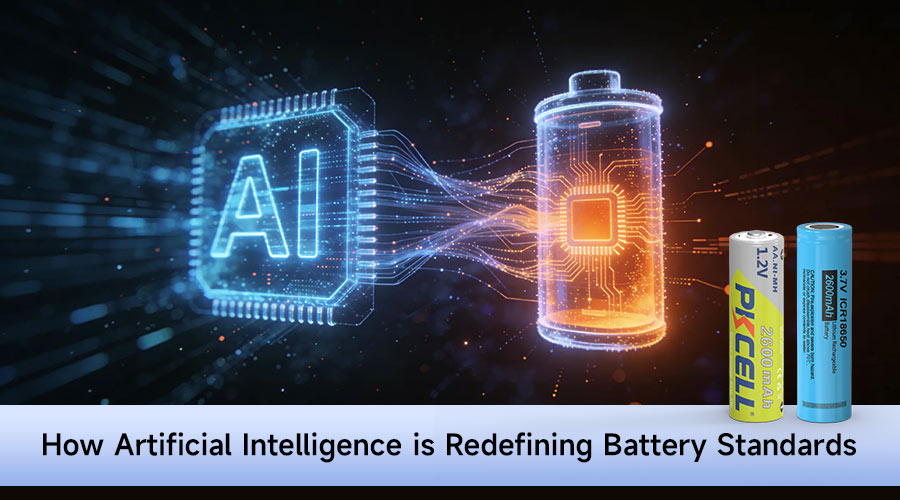
The “AI Revolution” is not just a software phenomenon; it is a hardware challenge. The shift from Cloud AI to Edge AI eliminates latency but creates a significant “power hunger” that traditional battery configurations were never designed to handle.
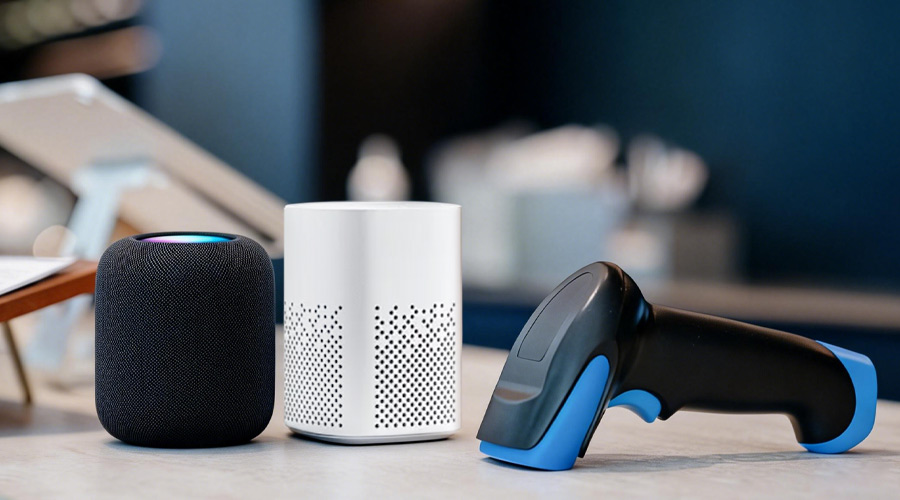
Previously, IoT and mobile devices spent most of their time in “standby” mode, waking up only for periodic data transmissions. Today, the rise of “always-listening” and “always-processing” devices—such as smart assistants, AI-powered wearable health trackers, and autonomous security cameras—means the battery is under constant load. This constant state of inference requires a fundamental update in how manufacturers select and implement power solutions.
II. Upgrading Your Power Source for AI
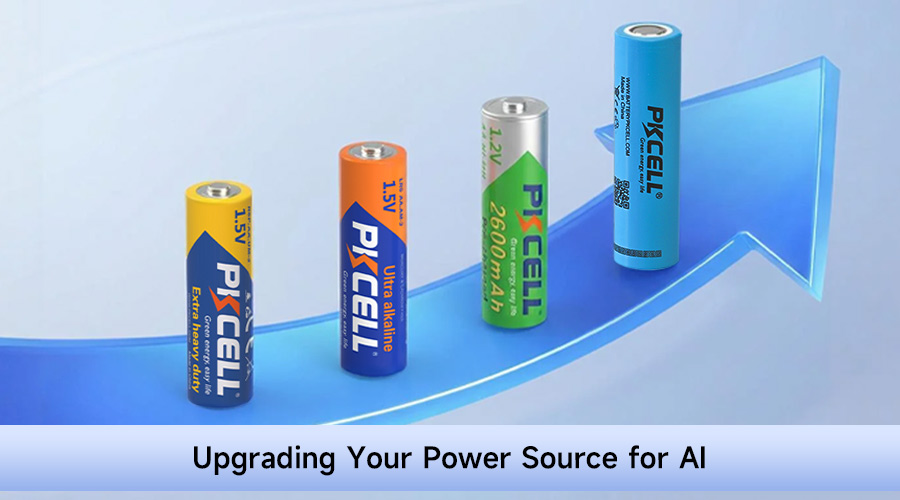
To make sure the devices last longer, manufacturers must transition toward chemistries that offer higher energy density and better discharge stability.
- Level 1: From Carbon-Zinc to Alkaline (Stable Voltage)
- AI sensors need a precise, stable voltage. Carbon-Zinc batteries drop voltage too quickly under load, which will lead to sensor errors. Alkaline, on the other hand, provides 5-7 times more energy, ensuring accurate data sampling for basic smart devices.
- Level 2: From Alkaline to Ni-MH (Sustainability & High-Drain)
- NiMH rechargeable batteries are ideal for devices with frequent AI-driven mechanical movements (like smart blinds). They offer lower internal resistance than alkaline and can handle high-current bursts without significant voltage sag.
- Quote for PKCell NiMH battery
- Level 3: From Ni-MH to Li-ion (Energy Density & Weight)
- For Edge AI cameras and wearables, a lithium ion battery (li ion battery) is essential. They offer the high energy density required to power NPUs (Neural Processing Units) while keeping the device lightweight and sleek.
- Quote for PKCell li-ion battery
- Level 4: Custom Lithium Battery Packs (Thermal & Load Management)
- High-end AI hardware often requires rechargeable lithium batteries assembled into custom packs. Using 18650 or 21700 cells allows for an integrated AI-BMS to manage the intense thermal loads generated during heavy AI computation.
- Customize lithium battery pack
III. How AI-BMS (Battery Management Systems) are Evolving
A modern lithium-ion battery is only as smart as its BMS. AI is now being used to manage the battery itself:
- State of Health (SoH) Prediction: AI-BMS uses machine learning to analyze microfluctuations in resistance to predict battery failure before it occurs.
- Load Balancing: AI learns the device’s usage patterns, pre-cooling the battery or optimizing the discharge curve during high-processing periods to squeeze out 20% more runtime.
IV. Comparative Data Table: Battery Chemistries for AI Applications
| Feature | Carbon-Zinc | Alkaline | NiMH (Nickel Metal Hydride) | Li-ion (Lithium Ion) |
| Energy Density | Very Low | Moderate | High | Very High |
| Rechargeable | No | No | Yes (500+ cycles) | Yes (500+ cycles) |
| Self-Discharge | Low | Very Low | Moderate (LSD avail.) | Very Low |
| Best AI Use Case | Clocks / Simple Remotes | Low-power Sensors | High-drain Toys/Smart Home | Edge AI / Wearables |
| Power Stability | Poor | Average | Good | Excellent |
V. Why Sourcing from PKCELL Matters
PKCELL provides AI product manufacturers with the scale and expertise needed for the AI era:
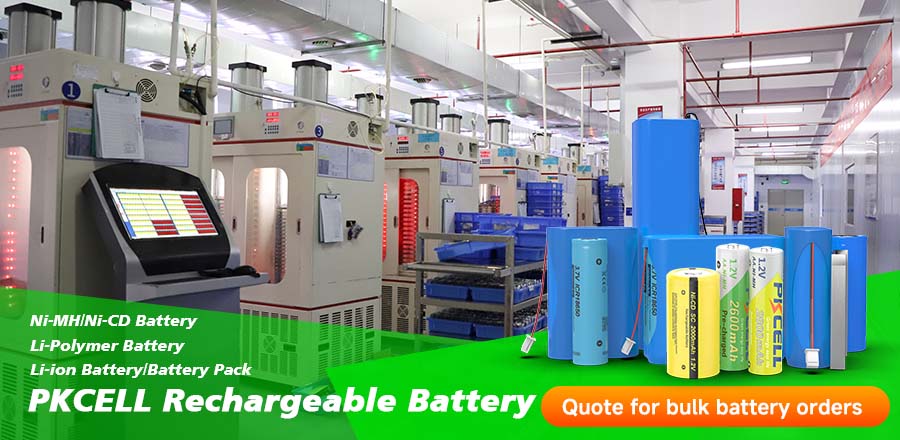
- 20+ Years of Excellence: PKCell has 20+ years of experience in battery manufacturing and customization.
- Certified Quality: All rechargeable lithium batteries meet CE, RoHS, and UN38.3 standards for global export.
- Massive Capacity: Our 3,000sqm facility produces 500,000 pieces monthly, ensuring your AI product launch never faces a power shortage.
VI. FAQs
Q: Does AI drain batteries faster?
A: Yes, on-device AI can increase power consumption by up to 50% because the processor is constantly active.
Q: Which battery is best for a smart lock with face recognition?
A: Ni-MH or Li-ion are best. They handle the high-current “spikes” required for the camera and motor much better than standard alkaline cells.
Q: Can I get a custom battery pack for my AI drone?
A: Yes, PKCELL specializes in custom battery pack design using high-rate Li-Po or Li-ion cells to meet specific voltage and weight requirements.
Post time: Feb-26-2026


