
Key Highlights
- Rechargeable AAA batteries excel in powering high-drain devices, offering both longevity and convenience.
- NiMH batteries dominate the market due to their consistent performance, extended battery life, and reduced environmental impact.
- Nickel-Zinc (NiZn) batteries emerge as a high-voltage choice, catering to specific needs in high-drain applications.
- 1.5V constant voltage lithium batteries are gaining traction, bridging gaps in high-performance, less common scenarios.
- Factors like mAh ratings, battery chemistry, cycle life, and charger compatibility play a pivotal role in choosing the right battery.
- PKCELL stands out as an emerging brand offering cost-effective, high-performance rechargeable AAA batteries.
Introduction
Choosing the right AAA rechargeable batteries for high-drain devices requires more than comparing capacity ratings . NiMH,NiZn, and 1.5V lithium rechargeable AAA batteries differ in output voltage, discharge performance, charging requirements,and device compatibility.
For portable instruments,wireless devices, and other battery-powered equipment,the right choice depends on operating current,peak power demand,runtime,and supported voltage range. This guide compares the three battery types and explains how to select suitable AAA rechargeable batteries for different applications.
AAA Rechargeable Battery Types for High-Drain Devices
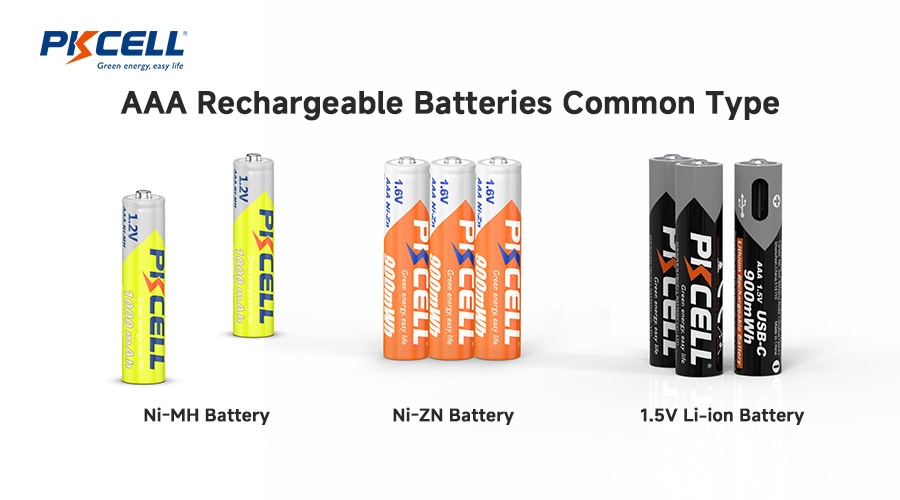 Not all rechargeable batteries are created equal. Their internal chemistry dictates their performance, particularly when it comes to delivering power to high-drain devices.
NiMH AAA Rechargeable Batteries: 1.2V and High-Drain Performance
NiMH batteries are, by far, the most common and recommended choice for general-purpose rechargeable batteries, and they often lead the pack for high-drain uses too.
- Key Characteristics:
- Nominal Voltage: 1.2V. While slightly lower than a fresh alkaline battery’s 1.5V, most modern electronic devices are designed to operate perfectly well with 1.2V NiMH batteries.
- Capacity (mAh): For AAA NiMH batteries, capacities typically range from 800mAh to 1100mAh. Higher mAh means longer runtime for your devices.
- Low Self-Discharge (LSD NiMH): This is a critical feature. Traditional NiMH batteries would lose charge quickly when not in use. However, modern LSD NiMH batteries (like those pioneered by Panasonic Eneloop technology) retain a significant portion of their charge for months, even years, making them ready to use right out of the pack or after sitting idle.
- No Memory Effect: Unlike older Nickel-Cadmium (NiCd) batteries, NiMH batteries have virtually no “memory effect,” meaning you don’t need to fully discharge them before recharging.
- High Current Output Capability: Good quality NiMH batteries are designed to efficiently deliver the high current bursts required by demanding devices.
- Why NiMH is Usually Best for High-Drain: Their ability to consistently deliver high current, combined with improved capacities and low self-discharge rates, makes them the most versatile and reliable option for the majority of high-drain electronics.
NiZn AAA Rechargeable Batteries: 1.6V for Compatible Devices
Ni-Zn batteries offer a unique voltage profile that sets them apart from NiMH.
- Key Characteristics:
- Nominal Voltage: Approximately 1.6V. This higher voltage is closer to that of fresh alkaline batteries, and in some devices, it can lead to noticeable performance improvements (e.g., brighter flashlight beams or faster motor speeds).
- Capacity (mAh): AAA Ni-Zn batteries typically have lower mAh ratings, often around 500mAh to 550mAh. However, their higher voltage means they can still deliver a comparable amount of energy (mWh) to some higher-capacity NiMH batteries.
- Pros & Cons for High-Drain: They can provide an extra “punch” in devices that benefit from higher voltage. However, Ni-Zn batteries are less common, require specific chargers (you cannot use a standard NiMH charger), and may not be compatible with all devices designed for 1.2V or 1.5V, as the slightly higher voltage could potentially damage sensitive electronics not rated for it.
1.5V Lithium AAA Rechargeable Batteries: Regulated Output
This is a newer, innovative type of rechargeable battery that directly addresses voltage concerns.
- Key Characteristics:
- Internal Buck-Boost Circuit: These batteries contain internal circuitry that takes a higher voltage lithium-ion cell and regulates it down to a stable 1.5V output throughout the discharge cycle. This is a significant advantage as it mimics the consistent voltage of a fresh alkaline battery.
- Capacity (mWh): For AAA batteries, their capacity is often expressed in milliwatt-hours (mWh) rather than mAh, as mWh gives a more accurate representation of total energy for varying voltages. PKCELL offers USB-C Lithium Rechargeable Battery 1.5V AAAwith options of 700mWhand 900mWh, providing reliable and consistent power output for your devices.
- Convenient Charging: Many of these batteries feature built-in USB-C charging ports, eliminating the need for a separate dedicated charger.
- Niche Use Cases: These batteries are ideal for voltage-sensitive devices that might struggle with the slightly lower 1.2V of NiMH, or applications where maintaining a constant voltage is critical for optimal performance. They are particularly useful for devices like sensitive medical equipment, certain cameras, or smart home devices where stable power is paramount.
AAA Rechargeable Battery Comparison: NiMH vs NiZn vs Lithium
NiMH, NiZn, and 1.5V lithium rechargeable AAA batteries have different voltage characteristics, discharge capabilities, and charging requirements. The comparison below helps identify which battery chemistry may suit your device.
| Feature | NiMH AAA | NiZn AAA | 1.5V Lithium AAA |
|---|---|---|---|
| Output Voltage | 1.2V nominal | 1.6V nominal | Regulated 1.5V |
| Capacity Rating | Commonly mAh | mAh or mWh | Commonly mWh |
| High-Drain Performance | Often suitable with an appropriate discharge rating | Model-dependent; check current and voltage limits | Limited by internal electronics and output rating |
| Voltage Behavior | Relatively stable during much of discharge | Higher voltage; varies during discharge | Regulated output until cutoff |
| Charging Method | Compatible NiMH charger | Dedicated NiZn charger | Model-specific charging or built-in USB-C |
| Main Advantage | Versatile rechargeable performance | Higher nominal voltage | Stable 1.5V output |
| Selection Priority | Devices compatible with 1.2V cells | Devices rated for NiZn voltage | Devices requiring regulated 1.5V power |
Note: Actual discharge current, energy capacity, cycle life, and runtime depend on the specific battery model and operating conditions. Always verify device voltage tolerance and charger compatibility before selecting a battery.
Factors to Consider When Choosing AAA Rechargeable Batteries for High-Drain Devices
Selecting the right rechargeable battery involves more than just picking the cheapest option. Here are the key factors to evaluate for optimal performance in high-drain applications:
AAA Rechargeable Battery Capacity: mAh vs mWh
Battery capacity is an important factor when choosing AAA rechargeable batteries, but higher mAh does not always mean longer runtime in high-drain devices.
- mAh (milliampere-hours) measures electric charge capacity. It is commonly used to describe NiMH AAA batteries. Actual runtime depends on the discharge current, operating temperature, and device cutoff voltage.
- mWh (milliwatt-hours) measures energy capacity and is useful when comparing batteries with different output voltages, such as 1.2V NiMH, 1.6V NiZn, and regulated 1.5V lithium batteries.
For high-drain applications, buyers should also evaluate the battery’s maximum discharge current, voltage stability under load, and usable energy. A battery with a higher capacity rating may not perform better if it cannot supply the required current.
Battery Chemistry: NiMH vs Lithium-Ion for High-Drain Applications
- NiMH: Their robust design and ability to handle high discharge currents make them a workhorse for everything from camera flashes to gaming controllers. They are widely compatible and benefit from a widespread charging infrastructure.
- 1.5V Constant Voltage Li-ion: These are excellent for devices that specifically require a stable 1.5V or where voltage drop from NiMH could be an issue. Their consistent output can prevent “low battery” warnings from appearing prematurely in some electronics. However, ensure your device can safely handle constant 1.5V.
Cycle Life and Recharge Efficiency in Demanding Scenarios
- Cycle Life: High-quality NiMH batteries can offer 500 to over 2100 charge cycles, making them a very long-term investment. While 1.5V Li-ion batteries also offer good cycle life, it’s typically in the range of 500-1000 cycles.
- Recharge Efficiency: How quickly and efficiently the battery can take a charge. Modern NiMH and Li-ion batteries are designed for efficient charging, but using a smart charger is key to maximizing this efficiency and extending battery life.
Compatibility with Chargers and Popular High-Drain Devices
- Chargers: Most NiMH AAA batteries use standard NiMH chargers. However, NiZn and 1.5V Constant Voltage Li-ion batteries require dedicated or compatible chargers. Always double-check charger compatibility to avoid damage to your batteries or charger.
- Device Compatibility: While NiMH (1.2V) batteries work in most devices, the higher 1.5V of some Li-ion and NiZn batteries could theoretically cause issues with extremely sensitive or older electronics not designed for constant voltage. Always check your device’s manual if you’re unsure.
AAA Rechargeable Battery Solutions for OEM and Bulk Orders
PKCELL offers rechargeable AAA battery options for commercial and OEM applications, including 1.2V NiMH batteries, NiZn batteries, and regulated 1.5V USB-C lithium rechargeable batteries.
For projects requiring conventional rechargeable AAA cells, explore our NiMH AAA rechargeable batteries.
For higher-voltage requirements, review our NiZn battery options.
We also offer USB-C rechargeable AAA lithium batteries for applications requiring regulated 1.5V output.
For OEM sourcing or bulk purchasing, share your required battery chemistry, voltage, capacity, discharge current, device application, and estimated order quantity to help identify suitable battery options.
Looking for AAA Rechargeable Batteries for Your Project?
Contact PKCELL to discuss battery specifications, product selection, OEM requirements, and bulk supply options for your application.
Conclusion
Picking the right AAA rechargeable batteries for high-drain use can really help with how your devices work and last. There are a few types to look at, like NiMH and NiZn. You need to know what your device needs before you buy. The mAh ratings, the type of battery (like NiMH), and how many times you can recharge it all matter a lot. These things show which batteries do well when your devices need a lot of power. Make sure the batteries work with both your charger and the device. This will give you a good and easy experience. If you keep these tips in mind, your high-drain devices will work their best. If you want help made just for you or want a good price, you can reach out and ask our experts for a quote today!
Frequently Asked Questions
How many times can AAA Rechargeable Batteries be recharged before losing capacity?
Rechargeable AAA batteries, like NiMH, can last for up to 1,000 charges. The life of these batteries depends on how good your charger is and the way you use and drain them. If you take care of your rechargeable AAA batteries, you can keep their battery capacity and make them last longer.
Are high-capacity AAA batteries always better for high-drain devices?
Higher-capacity batteries are good for devices, like laptops, that use a lot of power. They can run for a longer time and work better. But you need to make sure the battery voltage is right for your device, in accordance with the specifications. Always check battery capacity and voltage to be sure the battery fits your needs. This will help prevent problems and keep the device working well.
Can I mix different brands of AAA Rechargeable Batteries in one device?
It is not a good idea to use different brands of AAA batteries in one device. The packaging and voltage of each brand may be different. Some chargers also may not work well with all battery brands. These things can make some batteries lose power faster than others. This can hurt the device or make the batteries work not as well.
What’s the difference between regular and high-drain AAA battery usage?
High-drain devices need batteries that can discharge power faster. NiMH batteries work well in these, as they can meet the big energy demand. Most regular AAA batteries are made for longevity, not quick power use. That is why things that need high power use more energy.
Can I use regular alkaline batteries in high-drain devices?
Alkaline batteries can be used, but they are not good for high-drain devices. They lose their charge fast. This short battery life leads to more problems and is inefficient. It is better to use rechargeable NiMH or lithium batteries. These give better performance and last longer. They also have benefits for the environment, as they cut down on waste and don’t discharge as quickly.
Post time: Jul-18-2025


