
Key Highlights
- The V-16 emergency beacon is crucial for road safety, especially with Spain’s DGT regulations phasing out warning triangles by 2026.
- The battery is the lifeline of your V-16 beacon, ensuring it functions reliably when needed most.
- Understanding different battery types (non-rechargeable vs. rechargeable) is key to optimal performance.
- Proper maintenance and timely replacement significantly extend battery life and device reliability.
- PKCELL batteries offer a dependable solution for powering your V-16 beacon, ensuring long-lasting and stable performance.
- Compliance with Spanish DGT regulations requires understanding battery impact on device connectivity and operational duration.
Introduction
The V-16 emergency beacon is a portable warning light that uses amber LEDs to make sure you are seen when it matters most. This beacon has a magnetic base, so you can put it on your car or hold it in your hand. It gives you good visibility in places where there is little or no light. The V-16 beacon helps keep you safe if you have car trouble on the side of the road. The beacon works best when it has a good battery, so you should check the battery’s condition and how long it will last.
V-16 Batteries and Spanish DGT Regulations: What You Need to Know
Knowing how V-16 batteries work is important if you want to follow the rules of the Spanish DGT. The Dirección General de Tráfico (DGT) says you must use good emergency warning lights to keep up visibility on the road. The beacons should have tough builds, magnetic bases, and batteries that last a long time. These features help you meet the rules.
What is the V-16 Emergency Beacon?
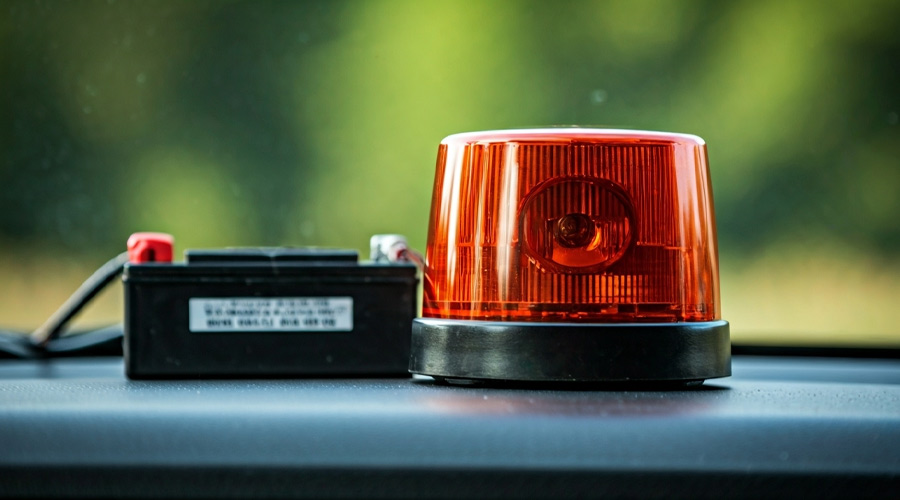
The V-16 emergency beacon light is a small, portable, and highly visible flashing light designed to be placed on top of a stopped vehicle to alert other drivers of its presence. Unlike bulky warning triangles, V-16 beacons can often be deployed quickly and safely from inside the vehicle, minimizing exposure to traffic. They typically emit an intense, omnidirectional amber flash, visible from a significant distance.
In Spain, the Directorate-General for Traffic (DGT) has been at the forefront of adopting the V-16. Since January 1, 2023, the V-16 beacon is a valid alternative to warning triangles. Crucially, from January 1, 2026, the connected V-16 beacon (señal V-16 conectada) will become mandatory, completely replacing the triangles. These connected devices automatically send your vehicle’s location to the DGT’s centralized platform upon activation, further enhancing response times in emergencies.
The Role of Batteries in DGT Compliance
For a V-16 beacon to comply with DGT regulations, its battery must meet stringent performance criteria. The beacon needs to emit an intense, 360-degree yellow-auto flash for at least 30 minutes. This continuous operation capability directly depends on a robust and reliable battery.
For the upcoming connected V-16 beacons, the battery’s role becomes even more critical. It must not only power the light but also the integrated communication module (e.g., IoT-NB-Fi or LTE-M) that transmits location data to the DGT cloud. This requires a battery with stable voltage output and sufficient capacity to sustain both illumination and data transmission for the required duration, ensuring your device is always “online” and ready to alert authorities.
Ensuring Your V-16 Emergency Beacon Battery Meets Spanish Standards
To ensure your V-16 beacon, and by extension its battery, complies with Spanish DGT regulations, look for devices that have:
- ENAC Certification: This accreditation ensures the device meets all technical specifications, including battery performance under various conditions.
- Guaranteed Operational Time: The battery must be capable of powering the beacon for at least 30 minutes under specified conditions (e.g., at certain temperatures).
- Connectivity (for 2026 onwards): If purchasing a new beacon, verify that its power source supports the long-term, low-power connectivity required for automatic location transmission. This often means specialized, high-capacity non-rechargeable lithium batteries or robust rechargeable systems.
Types of Batteries Used in V-16 Emergency Beacons
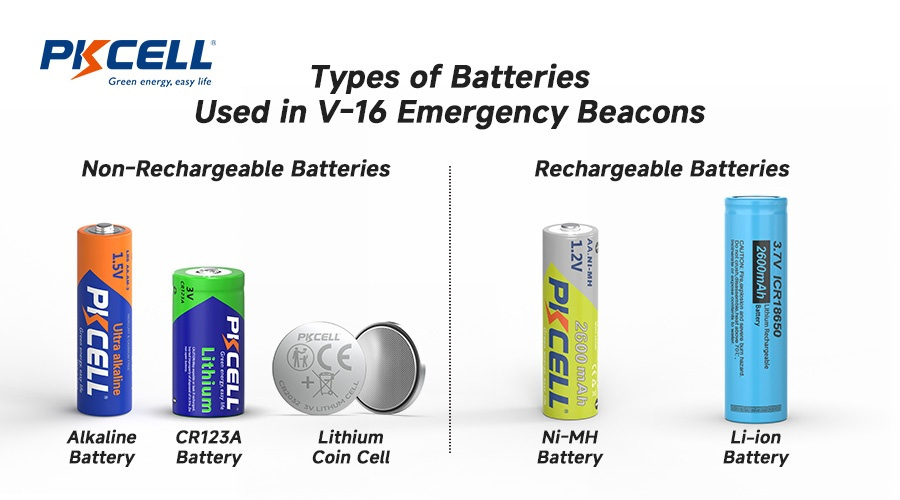
The V-16 emergency beacons typically use two main categories of batteries, each with its own advantages and disadvantages, the best choice will depend on how often you use the beacon and what you want from its battery life.
Non-Rechargeable Batteries
These are “single-use” batteries that cannot be recharged once depleted.
- Alkaline Batteries (e.g., AA/AAA):
- Pros: Widely available, inexpensive, easy to replace.
- Cons: Lower capacity compared to lithium, performance degrades in extreme cold, and prone to leakage over long periods. Some lower-end V-16 models might use these.
- Lithium Batteries (e.g., CR123A, Lithium Coin Cells):
- Pros: High energy density, excellent performance in wide temperature ranges (crucial for outdoor use), very low self-discharge rate (meaning they retain charge for years), light weight.
- Cons: Higher initial cost than alkaline. Most premium and connected V-16 beacons utilize these for their reliability and long shelf life.
Rechargeable Batteries
These batteries can be recharged multiple times, offering a more sustainable and cost-effective long-term solution.
- Li-ion (Lithium-ion) Batteries:
- Pros: High energy density, long cycle life, no memory effect. Increasingly common in integrated V-16 beacons.
- Cons: Higher initial cost, requires proper charging infrastructure, can lose capacity over time (though slowly).
- NiMH (Nickel-Metal Hydride) Batteries:
- Pros: Environmentally friendlier than older Ni-Cad, good capacity.
- Cons: Higher self-discharge than Li-ion, can suffer from memory effect if not fully discharged. Less common in modern V-16s compared to Li-ion.
For rechargeable V-16 emergency beacons light batteries, the convenience of not having to buy new batteries constantly is a major plus, as long as they are regularly charged and maintained.
Lifespan and Maintenance of V-16 Beacon Batteries
The battery in your V-16 emergency beacon is designed for reliability, but its lifespan and performance depend heavily on proper care.
Factors Affecting Battery Lifespan
- Read the Manual: Always follow the manufacturer’s specific recommendations for battery type and maintenance.
- Regular Checks: If your V-16 has a battery indicator, check it periodically. For non-rechargeable beacons, consider marking your calendar for annual battery replacement or testing.
- For Rechargeable Beacons: Ensure they are fully charged and then topped up every few months, even if not used. Avoid completely draining them before recharging.
- Inspect for Corrosion: Annually, open the battery compartment and check for any signs of corrosion (white or greenish crust). Clean with a cotton swab and vinegar if found.
- Avoid Mixing Batteries: Never mix old and new batteries, or different brands/types, as this can cause leakage or damage.
Essential Battery Maintenance Tips
Taking care of your V-16 beacon battery can help it last longer. Here are some key steps you should follow:
- Inspect Regularly: Look at the battery often for leaks or damage. This helps to make sure it stays safe and works well.
- Store Appropriately: Keep your beacon in a cool and dry spot. Do not put it in sunlight or let it get too hot or too cold.
- Clean Contacts: Use a soft cloth to wipe away any dirt or rust from the battery ends.
- Testing: Check your beacon from time to time. Make sure the LEDs still shine bright and work like they should.
If you follow these simple tips, the battery will last longer and keep your beacon working like new.
When to Replace Your V-16 Beacon Battery
- Weak or Erratic Light: If the light appears dimmer than usual, flickers, or fails to maintain its steady flash, the battery is likely low.
- Low Battery Indicator: Many modern V-16 beacons have an LED indicator for low battery.
- Manufacturer’s Recommendation: Adhere to the recommended replacement interval for non-rechargeable batteries (e.g., every 3-5 years, even if unused).
- Before Long Trips: Always check or replace your V-16 battery before embarking on a long journey, especially if it’s nearing its recommended replacement age.
- DGT Compliance: Remember, for Spain, your V-16 must be ready to perform its function. A weak battery compromises compliance.
Why PKCELL Batteries are a Reliable Choice for V-16 Beacons
For V-16 emergency beacons, unwavering reliability is paramount. PKCELL batteries are a top choice, renowned for their consistent performance that ensures stable light output and flash patterns. Their impressive long shelf life guarantees instant readiness for years of standby, and wide temperature adaptability ensures flawless functionality in any weather. Choosing this trusted brand means investing in the proven quality and reliable power your V-16 needs to meet safety regulations and perform when it truly matters.
Conclusion
To sum up, it is important to know the needs and details of V-16 emergency beacon light batteries. This helps you follow the rules set by the Spanish DGT. Pick the right battery for your beacon, whether it be rechargeable or not. Also, follow good ways to look after them. Doing this can make your beacon last longer. If you choose brands like PKCELL, you get strong performance and safety. Take care of your beacon batteries and swap them when needed. This makes sure your emergency beacon works well and meets the law. It will help keep you and other people safe on the road. If you want to get emergency beacon batteries, ask for price quotes today to find what works best for you.
Frequently Asked Questions
What type of battery is recommended for V-16 emergency beacons?
Most modern V-16 emergency beacons, especially those compliant with DGT regulations, are designed to use lithium batteries (e.g., CR123A) due to their high energy density, long shelf life, and excellent performance in varying temperatures. Brands like PKCELL are a top recommendation for these types due to their proven reliability. Some basic models might use alkaline (AA/AAA) batteries, and integrated units may have specific rechargeable (Li-ion) batteries. Always check your beacon’s manufacturer recommendations.
How long do V-16 beacon light batteries typically last?
Typical battery life for V-16 beacons can be up to 100 hours. This depends on how you use it and which battery you have in it. V-16 beacons usually have amber LEDs. Good care, like keeping the device out of extreme heat or cold, can help the battery life last longer. If you change the battery at the right time, the battery will work well.
How do I know when to replace my V-16 beacon battery?
Change the battery in your V-16 beacon if the warning light gets less bright, the beacon does not last as long as it used to, or you see any leaks. It is good to test the beacon often. This way, you can find out if it is working as it should. Then, in an emergency, you know the beacon will be ready for you to use.
What is the difference between V-16 batteries for connected vs. non-connected beacons?
Connected V-16 beacons often need advanced batteries because they have IoT features like geolocation. Non-connected types use standard batteries. These batteries only power the LEDs and accessories. Both types are made to be portable. They also have strong magnetic bases, so you can mount them easily.
Post time: Jul-24-2025


