
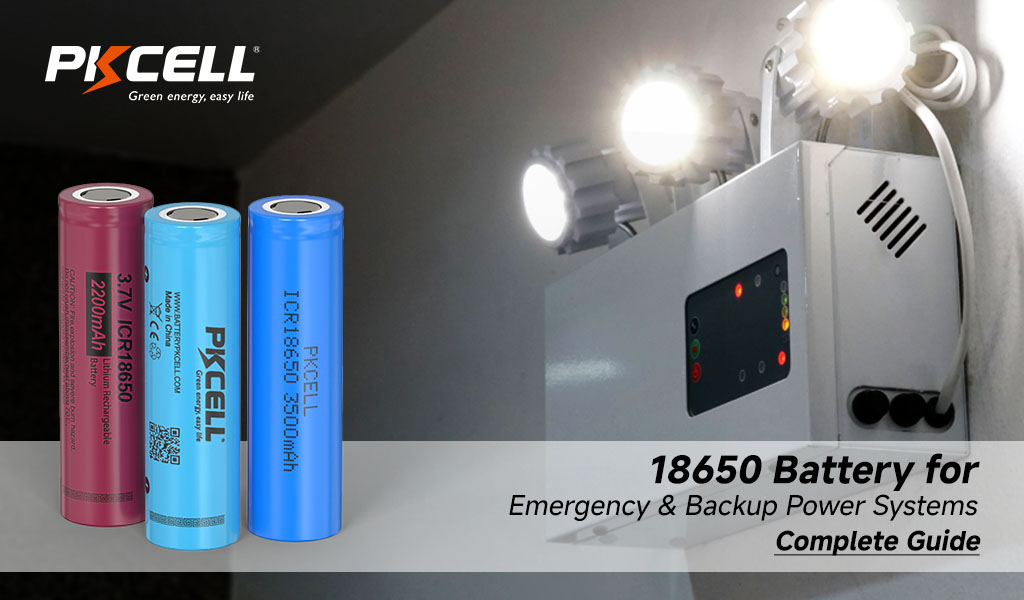
Why 18650 Batteries Are Used in Emergency & Backup Power Systems
Backup power is only as good as the battery behind it. In today’s world of constant connectivity and mission-critical operations, the 18650 battery 3 7v has become a cornerstone in emergency and backup systems.
The reason is simple: 18650 cells combine high energy density, compact cylindrical design, and proven reliability. Each li ion battery 18650 offers a stable nominal voltage of 3.6–3.7V and capacities ranging from 1800mAh to 3500mAh, depending on chemistry.
Another major advantage is scalability. OEMs and system integrators can configure these cells into custom packs—whether it’s 12V, 24V, or 48V—to suit specific emergency power applications. From UPS systems in hospitals to telecom towers and emergency lighting, the versatility of 18650 rechargeable batteries makes them the industry standard.
Key Specifications of 18650 Cells for Backup Power
When choosing a li on 18650 battery for emergency or backup use, technical specifications matter. Below is a reference table:
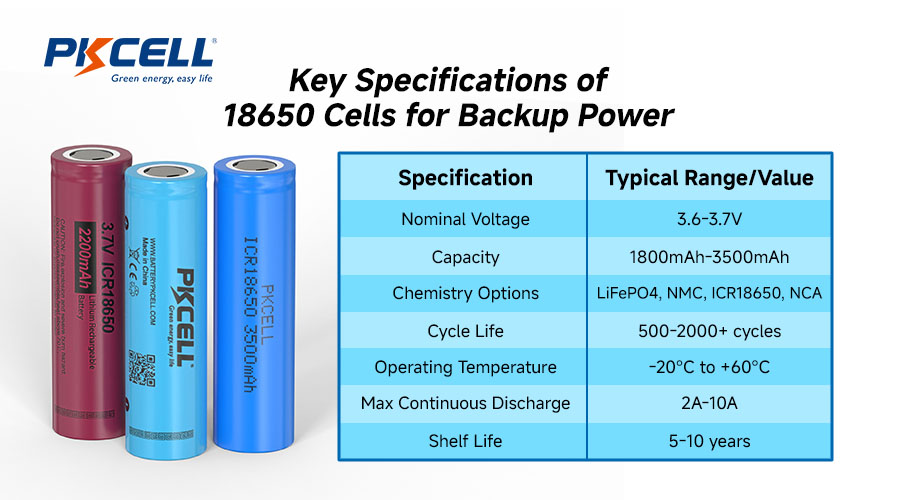
Note: The choice between a 3.7 v li ion battery 18650 and a LiFePO4 18650 depends on whether you value energy density or cycle life.
Spotlight on ICR18650 Battery: Why It Stands Out
Among different chemistries available for 18650 cells, the ICR18650 battery remains one of the most widely used options in emergency and backup applications. The reason is simple. It offers exceptionally high energy density, meaning more power can be stored in a smaller, lightweight format.
Another advantage of ICR18650 lies in its stable performance under low to moderate discharge rates. Emergency systems such as lighting or portable backup devices usually do not require constant high-drain output, which makes ICR cells an excellent fit. They also deliver a reliable voltage platform of 3.7V nominal, ensuring compatibility with a broad range of power management systems.
Of course, like every battery chemistry, ICR has its trade-offs. It generally offers fewer cycles compared to LiFePO4, and it requires careful thermal management. But in applications where energy density, compact design, and cost-effectiveness are more important than ultra-long cycle life, the ICR18650 battery clearly shines.
Applications of ICR18650 Battery in Backup Power Solutions
When it comes to real-world use, the ICR18650 battery plays a central role in several backup power systems.
Emergency Lighting Systems
Emergency lighting is one of the most common areas where ICR18650 batteries excel. These systems may sit idle for months or even years, only to be activated instantly when the main power supply fails. The ICR18650’s ability to hold charge for long periods while providing stable output ensures that the lights come on immediately and remain bright throughout the outage.
Because of its high energy density, fewer cells are needed to achieve the desired runtime, which helps manufacturers keep designs compact. This is especially important for building safety systems, where space is often limited but performance can not be compromised.
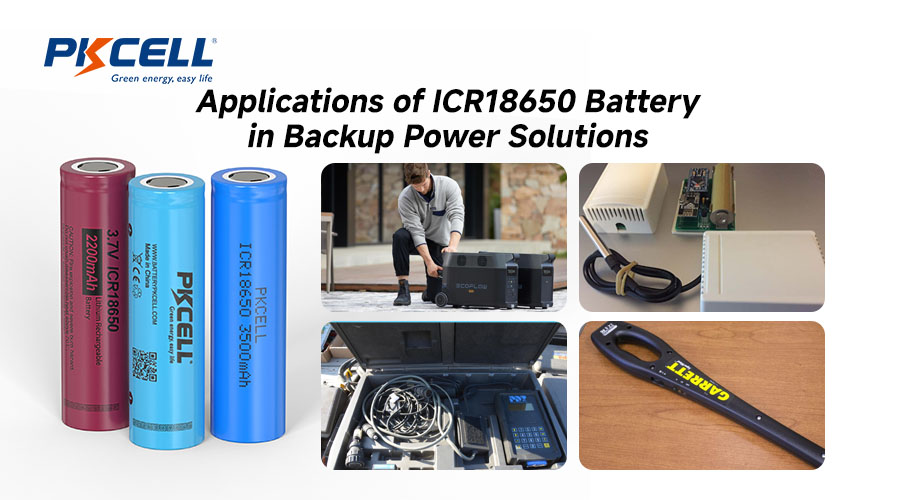
Portable Backup Power Units
Another ideal use case is portable backup power solutions. Think of compact emergency power banks, rechargeable lanterns, or small backup modules for home and office electronics. In these devices, size and weight matter just as much as capacity.
Here, the ICR18650 offers the perfect balance. It delivers enough energy to recharge small devices or keep lights running for several hours, without making the product bulky or heavy. For OEMs, it is a cost-effective choice that also gives flexibility in pack design.
Specialized Industrial and IoT Backup
ICR18650 cells are also used in some small low-to-moderate drain industrial devices. Examples include sensor nodes, portable diagnostic tools, and handheld instruments that require reliable emergency backup. While these systems do not usually demand thousands of cycles, they do benefit from the ICR cell’s energy density and broad availability.
In summary, while chemistries like LiFePO4 are often selected for UPS or telecom backup due to their extended cycle life and safety margin, the ICR18650 battery remains the top choice for emergency lighting, portable backup, and many compact industrial devices where energy density and cost-effectiveness are the driving factors.
Safety & Reliability Considerations
While lithium ion 18650 cells are powerful, safety can not be overlooked. Proper integration with a Battery Management System (BMS) ensures:
- Overcharge protection (prevents cell damage).
- Short-circuit prevention (protects equipment).
- Thermal management (avoids overheating and fire risk).
Choosing industrial-grade cells over consumer-grade options is another key step. OEM-grade 18650 rechargeable batteries are tested for reliability, safety, and compliance with international standards. This reduces liability and guarantees performance in mission-critical systems.
Why Choose PKCELL as Your 18650 Battery Supplier
PKCELL offers more than just batteries—we deliver complete OEM solutions. Our advantages include:
- A wide portfolio covering LiFePO4, NMC, and ICR18650 chemistries.
- Bulk supply with global shipping and stable lead times.
- OEM customization, including tags, wires, PCM integration, and modular pack assembly.
- Full compliance with UN38.3, IEC62133, UL, CE, and RoHS certifications.
Whether you need standard 3.7 v lithium battery 18650 packs or fully customized backup solutions, PKCELL ensures reliable performance tailored to your industry needs.
Quote for PKCell ICR 18650 Battery
FAQs
Q1: How long does a 18650 battery last in a UPS system?
Depending on chemistry, 18650 UPS battery packs can last 5–10 years, with LiFePO4 versions offering the longest cycle life.
Q2: Which 18650 chemistry is best for emergency lighting?
For compact, high-energy applications, NMC 18650 cells are ideal. For maximum safety and longevity, LiFePO4 is recommended.
Q3: Can 18650 batteries be customized into 48V backup power packs?
Yes. Multiple 3.7 v rechargeable batteries in 18650 format can be configured into 12V, 24V, or 48V packs with BMS integration.
Q4: Are 18650 batteries safe for use in hospitals and medical equipment?
Yes, provided they are industrial-grade, certified, and integrated with protective PCMs. PKCELL offers compliant solutions for medical use.
Q5: What certifications should 18650 backup batteries have?
At minimum: UN38.3, IEC62133, UL, CE, and RoHS. These ensure safety in global transport and industrial deployment.
Post time: Sep-16-2025


